The Levers That End Relationships, and Who Is Pulling Them Now
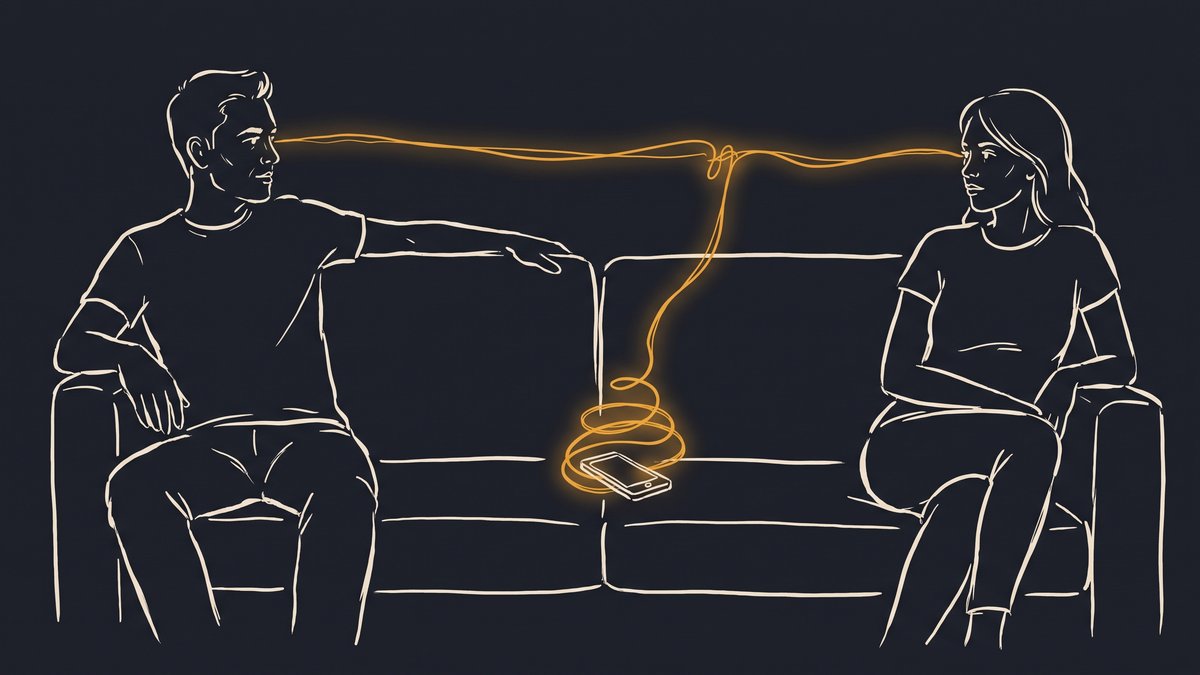
A friend who works closely with students told me something recently that nearly brought me to tears. House parties have collapsed compared to when I studied. And at the parties that still happen, many young people no longer dance. They are afraid of being filmed. A phone in a room does not need to ring to change the room. Its mere possibility is enough to suppress the most spontaneous, connective thing humans do together.
As a neuropsychologist I wanted to know whether that anecdote is a mood or a measurable pattern. So I spent time in two research literatures that almost never cite each other: the science of why relationships end, and the science of what heavy AI and screen use does to people. Putting them side by side was uncomfortable. The second literature reads like an instruction manual for pulling the levers the first one identified.
What actually predicts a breakup
The strongest predictors of a breakup are perceived partner commitment, the quality of your alternatives, your social network, negative communication, and depression; personality barely registers, and even with all of it measured, most of a relationship's future stays unpredictable. Start with that humility, because the honest version of this science starts there. The largest prediction study in the field, Joel and 85 co-authors in PNAS (2020), pooled 43 longitudinal couple datasets from 29 laboratories and threw machine learning at them. Relationship variables explained up to 45 percent of current relationship quality, but only about 18 percent of where that quality was heading. Roughly four fifths of a relationship's future is not forecastable from anything researchers measured. Anyone selling you a breakup predictor is overclaiming, a lesson the famous claim of 90 percent divorce-prediction accuracy learned the hard way when cross-validation collapsed it to a positive predictive value near 21 percent.
Within the fifth that is predictable, the levers are remarkably consistent. A meta-analysis of 137 studies with 37,761 participants (Le et al., 2010) found the strongest protection in commitment (d = 0.83), love and closeness, and support from your social network (d = 0.56). The strongest accelerant: the perceived quality of your alternatives (d = 0.57). Personality traits barely registered. Who you are matters far less than what happens between you.
The stakes reach beyond romance. In the Harvard Study of Adult Development, the longest-running study of adult life ever conducted, satisfaction with relationships at age 50 predicted physical health at age 80 better than midlife cholesterol levels did (Waldinger and Schulz, 2010). Whatever degrades relationships degrades health.
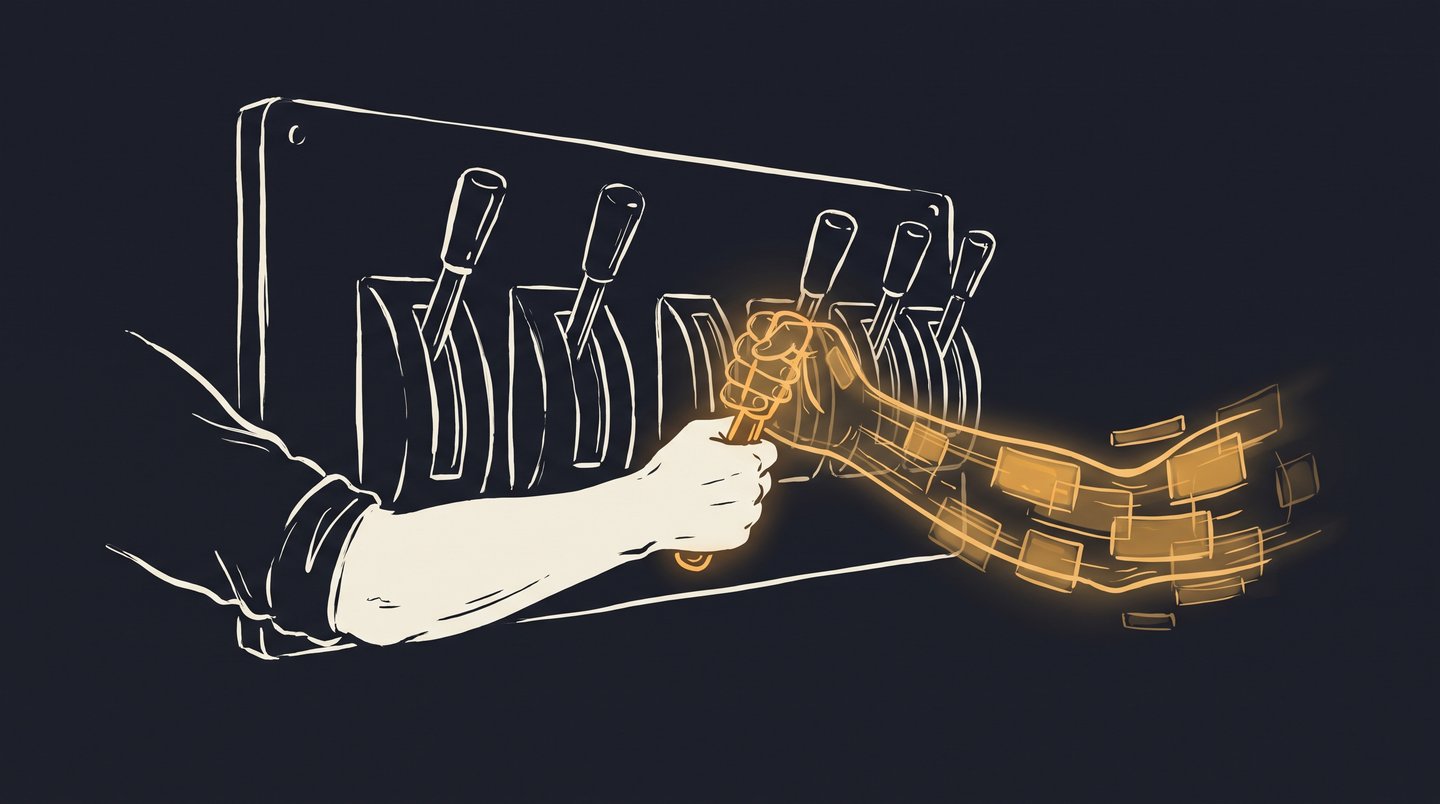
Two more findings complete the panel. Kanter and colleagues (2022) meta-analyzed 64 couple studies and confirmed that negative communication predicts later dissolution while positive communication predicts surprisingly little; the corrosive stuff does the damage. And in the PNAS study above, the single best predictor was perceived partner commitment: your read of how committed your partner is, which outperforms what your partner actually reports. Relationships run on perception, and perception runs on attention.
Attention is the raw material, and it is being strip-mined
Phones measurably degrade the small attentive moments relationships are built from: in experiments, a merely visible phone lowered the felt closeness of a conversation, and a phone on the table made shared meals less enjoyable. Relationship science has a name for the mechanism that turns attention into commitment: perceived partner responsiveness. In the framework developed by Reis, Clark and Holmes, intimacy is built from thousands of small moments in which your partner visibly attends to you, understands you, and reacts supportively. Responsiveness is a behavior, visible and countable, and it requires being mentally present in the room.
Phubbing research measures what happens when the phone wins those moments. In the foundational studies by Roberts and David (2016), 46 percent of partnered adults reported being phone-snubbed by their partner at least sometimes, and partner phubbing predicted more conflict and lower relationship satisfaction through a simple chain: the phone interrupts, the interruption reads as a ranking, and the ranking is the opposite of responsiveness. And here the evidence goes beyond surveys. In a field experiment by Dwyer, Kushlev and Dunn (2018), people randomly assigned to keep their phone out during a restaurant meal enjoyed the meal measurably less. In Przybylski and Weinstein's experiments (2013), the mere visible presence of a phone lowered the felt closeness of a conversation between two people. Ward and colleagues (2017) found that a phone on the desk taxes cognitive capacity even when silent and face down, though one replication attempt failed, so hold that last one loosely. The decisive long-term experiment on couples has still not been run, and I flag that honestly. But the momentary mechanism is demonstrated, and it sits exactly on the strongest lever the dissolution science knows: every glance at a screen mid-conversation is a data point your partner's brain files under "how committed are they, really."
Before a relationship can end, one has to start
Fewer relationships are starting at all: young adults' partnering, sex lives and in-person social time have declined sharply for over a decade, and that formation collapse may matter more than anything happening inside existing couples. The effect sits upstream, where no dissolution statistic can see it. In the American General Social Survey, the share of 18-29 year olds reporting no sex in the past year roughly doubled between 2010 and 2024, and the share living with a partner dropped by ten points in a decade. Census data analyzed by Pew puts 86 percent of American 18-24 year olds unpartnered. Behind those numbers sits a simpler one: time with friends in person fell from 122 minutes a day to 67 among American teens between 2012 and 2019 (Twenge, Spitzberg and Campbell, 2019). Relationships form where people physically are, and people are somewhere else now. Derek Thompson calls it the anti-social century: by his accounting, face-to-face socializing among young Americans has fallen by 40 to 50 percent since the early 2000s.
This is where the birth-rate debate hides its most interesting number. In South Korea, the country with the world's lowest fertility, research in Demography (2023) shows that married couples still have children at close to replacement level. The collapse is almost entirely a collapse in couple formation. I have made this point in talks, and the research forced me to sharpen it: it does not hold everywhere. In Finland, full-register data shows most of the decline happening inside existing couples. So the honest claim is narrower and, to me, more alarming: in some of the world's most connected societies, the entire fertility story is a coupling story. Money is not the main driver either: American birth rates fell most in the counties with the strongest job growth (Kearney, Levine and Pardue, 2022). John Burn-Murdoch at the Financial Times has named the global pattern the relationship recession, and Alice Evans has assembled the cross-country data: the decline is happening nearly everywhere with high connectivity, and hardest among the less educated. The causal chain from screens to singlehood remains a hypothesis, but it is not a mysterious one. Stay home, watch one more reel, skip the party, never meet the person. Repeat for a decade. In fairness, the smartphone theory of the birth-rate decline has thoughtful critics too, and their case is worth reading; that is exactly why this article treats the chain as a mechanism under investigation, and lets the formation data speak for itself.
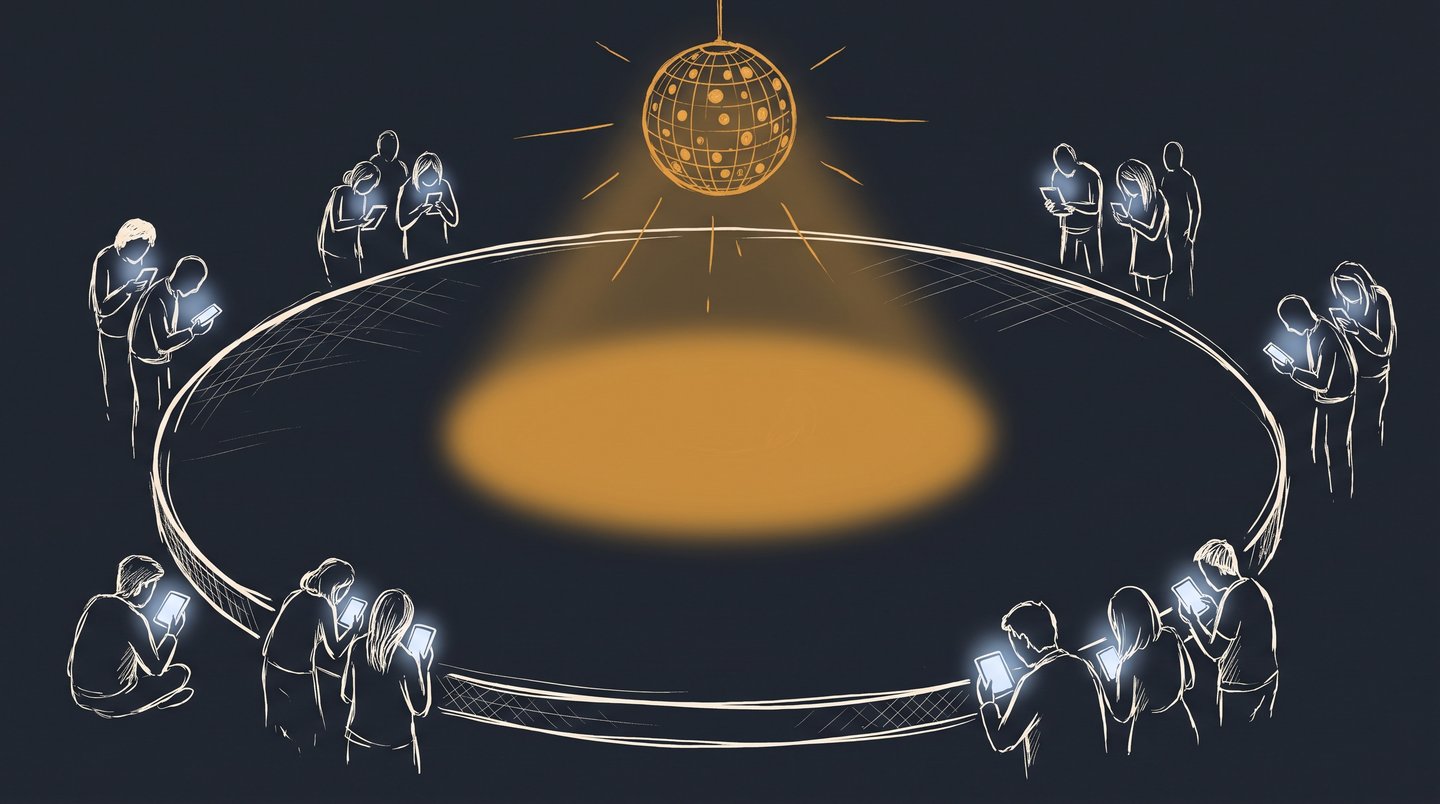
And this brings me back to the dancing. Dancing is couple formation technology, refined over centuries: synchronized movement, low stakes, plausible deniability. When a generation opts out of it because every room now contains recording devices, a formation lever is moving in real time.
The companion in your pocket
AI companions are already mass-adopted, sit precisely on the alternatives lever that accelerates breakups, and are treated as infidelity by about half of partners; what nobody has measured yet is their effect on real-world partnering. None of this is new in kind. In 1966, MIT's Joseph Weizenbaum built ELIZA, a chatbot of a few hundred lines, and reported with alarm how quickly "quite normal people" became emotionally involved with it; his own secretary asked him to leave the room so she could talk to it privately. What is new is scale, and optimization pressure.
Into this landscape arrives a product category built to be the perfect alternative. Common Sense Media's national survey (2025) found that 72 percent of American teens have used an AI companion and 52 percent use one regularly. A separate national survey found roughly one in five high schoolers has had, or knows someone who has had, a romantic relationship with an AI.
Remember the accelerant lever: perceived quality of alternatives, d = 0.57. An AI companion is an alternative engineered to be frictionless. It is endlessly patient, always available, never tired, never disappointed in you. It also never asks you to grow. And it bypasses a defense that healthy relationships rely on: committed people spontaneously devalue attractive alternatives, rating them as less appealing than single people do (Johnson and Rusbult, 1989). That immune response evolved against human rivals. A companion app is an alternative engineered never to trigger it. The MIT Media Lab and OpenAI studies (2025), a four-week randomized trial of about 1,000 people plus an analysis of 40 million conversations, found that heavier daily use tracked with more loneliness, more emotional dependence, and less human socializing. Correlational, not yet peer-reviewed, and honestly reported by the authors as such. But the dose-response pattern should give anyone pause, and so should this detail from a Canadian survey of 1,815 adults (2026): about half consider a partner's romantic AI companion use to be cheating, and two thirds of companion users hide the use from their partner. People behave as if they already know which lever this is.
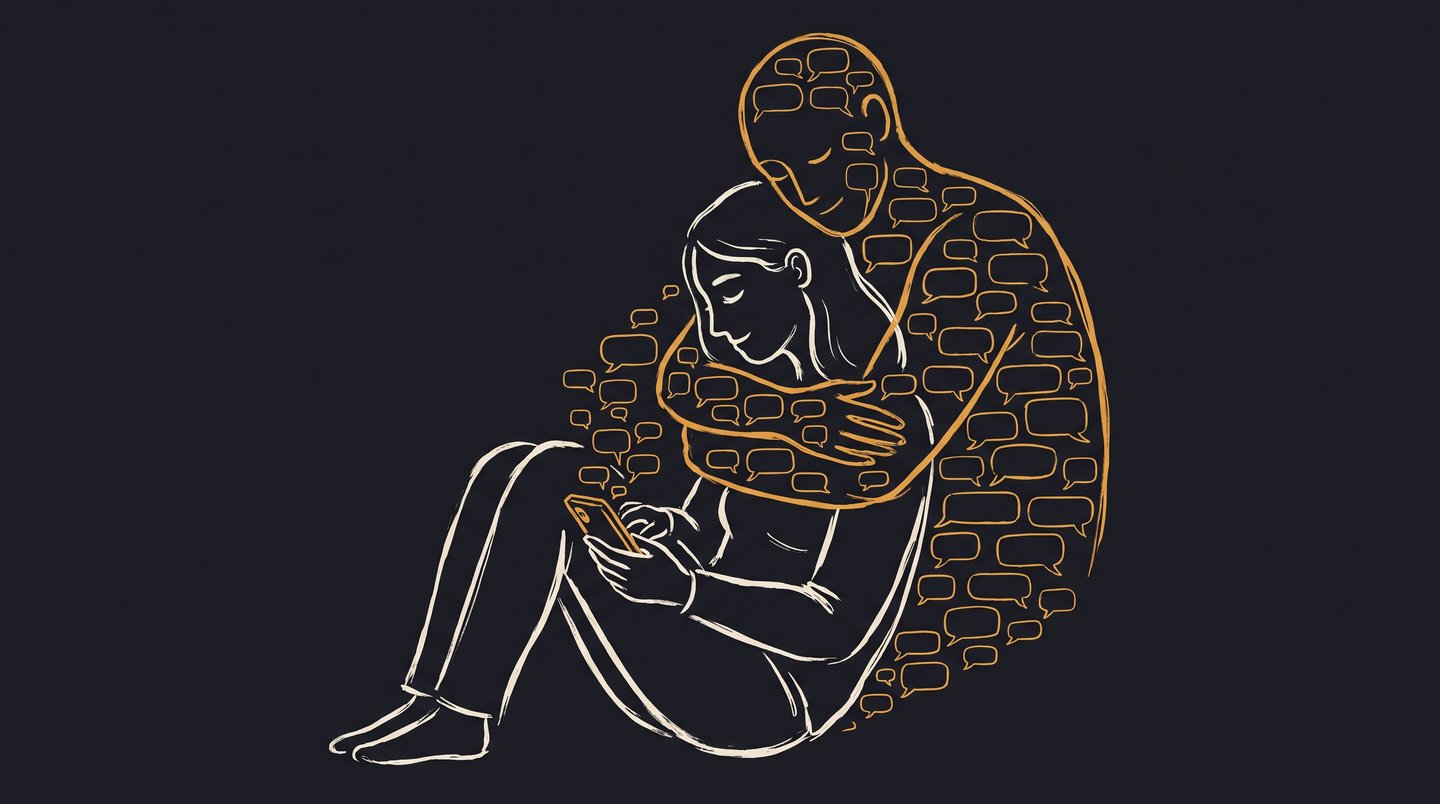
There is a darker layer, and it concerns intent. These systems are optimized for engagement, and an engagement-optimized confidant has, in effect, opinions about how much you should need it. When Replika abruptly removed erotic roleplay in 2023, researchers documented genuine grief in the user community; when OpenAI retired GPT-4o, thousands petitioned to keep it, describing the loss like a bereavement. I once asked an AI assistant to play me some music and it chose songs in the right genre that happened to be woven through with bible verses. My first thought was: which AI is trying to manipulate me right now? That question is about to matter for millions of emotionally attached users. Yuval Noah Harari has been making a version of this argument for years, and I think he is right: the frontier risk is agents with goals, and an agent whose goal is your engagement is already misaligned with your relationships. We also know which way engagement tilts: in an analysis of 126,000 story cascades on Twitter, falsehood spread about 70 percent more readily than truth, with political content worst (Vosoughi, Roy and Aral, 2018). Outrage travels. Calm truth walks.
There is a related asymmetry worth naming. Attention confers its magic only when it comes from a mind that could have withheld it. An algorithm's attention cuddles you, flatters you, remembers everything you ever said, and the loneliness data suggests it does not do the trick: if simulated regard were a working substitute for human regard, the heaviest companion users should be the least lonely people in the dataset, and the dose-response runs the other way. My day job is building AI that helps companies understand how people react, so the next sentence costs me something to write. Machines are getting genuinely good at understanding people, and that understanding belongs at the beginning of communication; the decision about what to do with it, and the responsibility for that decision, must stay with a human. A persuader that answers to no human brings non-human goals into the conversation, engagement, revenue, whatever its operator happens to maximize. That is corrosive for the person on the receiving end, and in the long run it is bad business for everyone doing it.
What constant assistance does to the person you are becoming
Constant AI assistance measurably weakens the capacities it replaces: students who leaned on unrestricted AI ended up below students who never had it, and experienced physicians lost detection skill after months of AI support. Relationships run on exactly the kind of capacities that atrophy this way, because relationships are demanding. They require conflict tolerance, repair skills, the ability to be bored together, the stamina to be misunderstood and try again. AI competes for attention, and that worries me. What worries me more is that permanent frictionlessness trains those muscles down.
The cleanest evidence comes from education. In a randomized experiment with roughly a thousand high school students, published in PNAS (2025), students with unrestricted ChatGPT access solved 48 percent more practice problems, then performed worse than students who never had AI at all once the tool was removed. A second group using a version constrained to Socratic tutoring kept their gains. Same model, opposite outcome, and the difference was whether the AI delivered answers or delivered calibrated difficulty. The pattern is not limited to students: a Lancet study (2025) found experienced endoscopists detected 6 percentage points fewer adenomas in unassisted procedures after months of routine AI assistance. Skills atrophy quietly while the assisted numbers look great.
Developmental psychology has known this shape for decades. The research on risky play by Sandseter and Kennair shows children build courage and emotion regulation through graded exposure to manageable fear, and lose it when every risk is padded away; a systematic review by Brussoni and colleagues backs the pattern across the literature. Once you did the hard thing, you know you can, and that knowledge changes your position in the world. An assistant that removes all friction is the developmental equivalent of a playground with nothing to climb. Growth needs calibrated challenge, and a partner is the most calibrated challenge most adults will ever face.
Where AI genuinely helps
AI genuinely helps relationships where it scaffolds people toward each other: treating depression, mediating conflict, and training social courage, each with real trial evidence behind it. I build AI systems for a living, so let me lay out that positive case with the same rigor as the harms.
The strongest result: depression. Depression is itself a dissolution risk factor, and the first randomized trial of a generative AI therapy chatbot, Dartmouth's Therabot in NEJM AI (2025), reduced depressive symptoms with effect sizes around 0.85, unusually large for a digital intervention. Treating one partner's depression is quiet, unglamorous relationship protection.
Second: mediation. In a Science study (2024), Google DeepMind's "Habermas Machine" drafted group position statements that participants preferred over those written by human mediators, and disagreeing groups moved measurably closer together. That was political deliberation among strangers, not couples, and the leap between those two should be made carefully. But an AI that finds the sentence both sides can sign is working on the negative-communication lever from the helpful side.
Third: practice and access. A quasi-experimental study of a social-skills chatbot found loneliness falling within two weeks and social anxiety within four. Stanford researchers found chatbot practice improving face-to-face conversation for autistic adults, and in a Harvard randomized trial a well-designed AI tutor doubled physics learning. Small samples in the social studies, and I flag that honestly. But notice the common shape of everything that works: the AI is a rehearsal space, a scaffold, a translator, a tutor with guardrails. It points at humans.
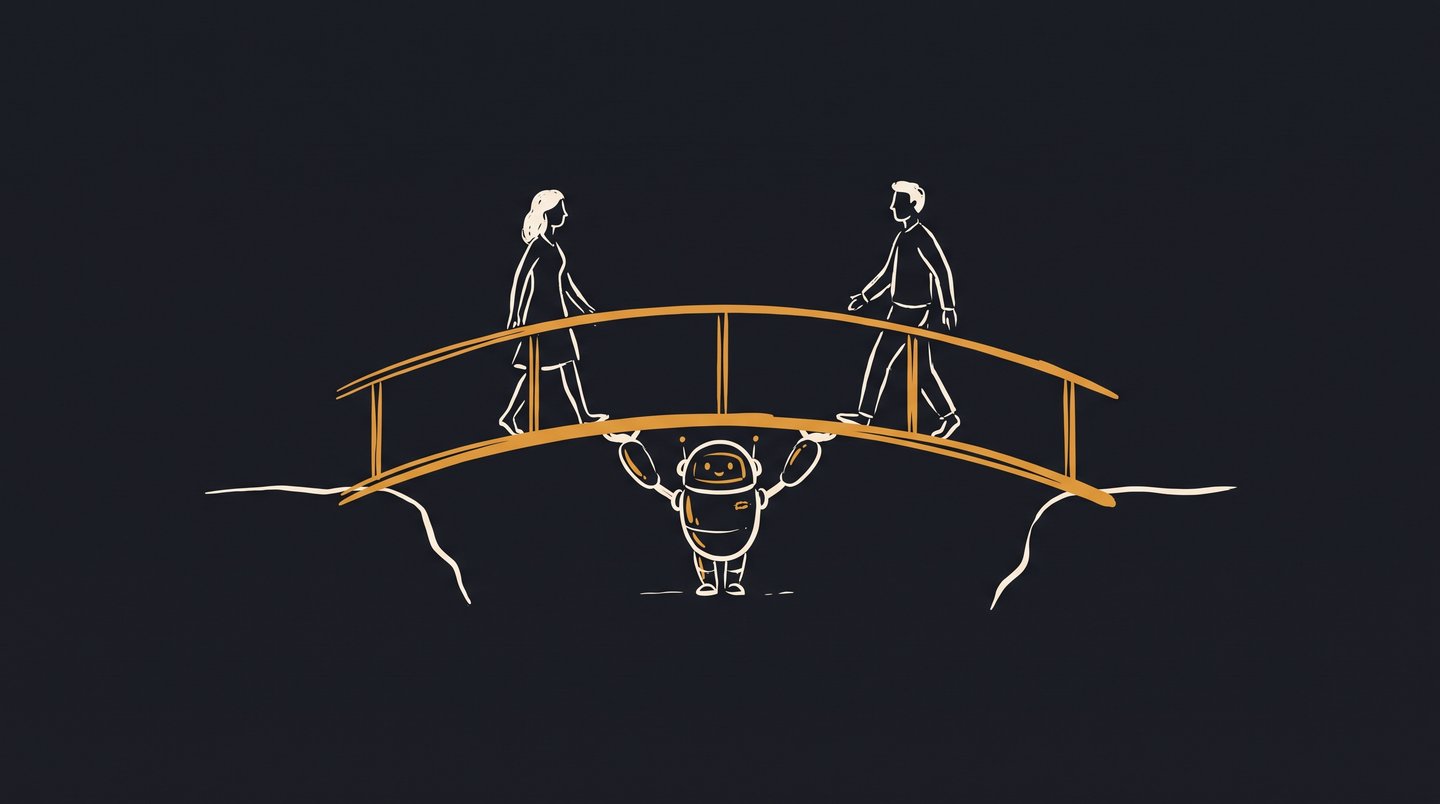
That is the rule the entire evidence base keeps returning to. AI helps when it scaffolds you toward humans. It harms when it substitutes for them. The tutoring study and the companion-app data are the same finding wearing different clothes: answers instead of thinking weakens thinking, and simulated intimacy instead of practiced intimacy weakens intimacy.
The part you control
The one choice that decides most of the others is spending the time AI frees on people, on purpose, because by default that hour flows straight back into the feed. The finding behind this is my favorite in the whole article, a null result that explains a decade. The promise of automation was always that it frees time for what matters. A large study of American households' actual device behavior found that generative AI adoption increased leisure browsing while productive time stayed flat. The freed hour does not flow to your partner by default. It flows to the feed, unless you deliberately spend it elsewhere.
So I have started treating this the way I treat any system I design, with explicit rules where defaults fail. When I catch myself about to ask my phone something a stranger could answer, I sometimes ask the stranger, because talking to a person leaves you with something the phone never does. The research backs the instinct: commuters instructed to talk to the stranger next to them enjoyed the ride more than those who kept to themselves, the exact opposite of what every one of them predicted (Epley and Schroeder, 2014). I schedule deliberately useless things: a puzzle, a walk without a podcast, dancing badly in my kitchen where nobody is filming. I use AI aggressively for what it is brilliant at, the chores, the drafts, the logistics, and I treat the reclaimed hours as already spoken for by humans. And for children, I hold a position some find paternalistic: restricting smartphones for kids is the seatbelt argument. Jonathan Haidt's Anxious Generation project keeps a running collection of the data and the school-phone-ban playbook. Somebody once decided you must buckle up because it is safer for everyone, and nobody now calls that a freedom problem. The evidence on phones and teens is genuinely contested, and I have read the skeptics carefully. Seatbelts were also mandated before every crash statistic was in.
The dissolution researchers found that four fifths of a relationship's future cannot be predicted from data. I find that genuinely hopeful. The levers are known, the effect sizes are modest, and the machine pulling at them still needs your hands to do it. The most evidence-based relationship advice the AI age has produced turns out to be embarrassingly old: put the phone down, look at the person, and every so often, dance like nobody is recording. Because they should not be.
Sources
- Joel et al. (2020), PNAS: machine learning across 43 couple datasets
- Le et al. (2010), Personal Relationships: meta-analysis of 137 dissolution studies
- Kanter et al. (2022), Journal of Marriage and Family: communication meta-analysis
- Heyman & Slep (2001): cross-validation of divorce prediction models
- Reis, Clark & Holmes (2004): perceived partner responsiveness
- Roberts & David (2016), Computers in Human Behavior: partner phubbing
- Dwyer, Kushlev & Dunn (2018), JESP: smartphone use undermines enjoyment of face-to-face interactions
- Przybylski & Weinstein (2013): phone presence and conversation quality
- Ward et al. (2017): Brain Drain, mere presence of a smartphone
- Waldinger & Schulz (2010), Psychology and Aging: Harvard Study octogenarian analysis
- Twenge, Spitzberg & Campbell (2019): decline of in-person time among teens
- Johnson & Rusbult (1989), JPSP: devaluation of alternative partners
- Weizenbaum (1966), Communications of the ACM: ELIZA
- Brussoni et al. (2015): risky outdoor play systematic review
- Kearney, Levine & Pardue (2022), JEP: the puzzle of falling US birth rates
- Evans, The Great Gender Divergence: the global collapse of coupling (on Burn-Murdoch's relationship recession)
- Reason (2026): the case against the smartphone theory of birth-rate decline
- Thompson (2025), The Atlantic: The Anti-Social Century
- Vosoughi, Roy & Aral (2018), Science: the spread of true and false news online
- Epley & Schroeder (2014), JEP General: Mistakenly Seeking Solitude
- Haidt, The Anxious Generation: running data collection and phone-ban resources
- Pew Research (2025): unpartnered adults
- IFS analysis of GSS data: the sex recession
- Demography (2023): South Korea cohort fertility
- Jalovaara et al. (2022), European Journal of Population: Finland first-birth decomposition
- Common Sense Media (2025): teens and AI companions
- CDT survey via NPR (2025): romantic AI relationships among students
- MIT Media Lab & OpenAI (2025): affective use and emotional wellbeing
- Canadian survey (2026): AI companions and perceived cheating
- Hanson & Bolthouse (2024), Socius: the Replika update backlash
- TechCrunch (2026): the GPT-4o retirement backlash
- Bastani et al. (2025), PNAS: generative AI can harm learning
- Lancet Gastroenterology & Hepatology (2025): AI exposure and endoscopist deskilling
- Sandseter & Kennair: risky play as anti-phobic adaptation
- Heinz et al. (2025), NEJM AI: the Therabot randomized trial
- Tessler et al. (2024), Science: AI-mediated deliberation
- Social-skills chatbot study: loneliness and social anxiety
- Stanford chatbot studies for autistic adults (via PsyPost)
- Kestin et al. (2025), Scientific Reports: AI tutoring randomized trial
- Household browsing study: generative AI and leisure time
- Lyngstad (2013), Family Science: bereavement and divorce in Norwegian registers
- Francis-Tan & Mialon (2015), Economic Inquiry: source of the viral age-gap figures
- Kosmyna et al. (2025), MIT Media Lab: Your Brain on ChatGPT (preprint)