What Are Digital Twins? The Complete Guide for Marketers
Imagine testing your next campaign before spending a single cent. Not with a handful of opinions from the team, but with thousands of consumers, in minutes instead of weeks. Sounds like science fiction? Welcome to the world of Digital Twins in market research.
The reality for most marketers looks like this: traditional market research takes weeks, costs five figures, and delivers results that are often outdated by the time the analysis is complete. Focus groups are prone to group dynamics, online panels struggle with declining response rates, and the lingering question remains: does this truly reflect what the target audience thinks?
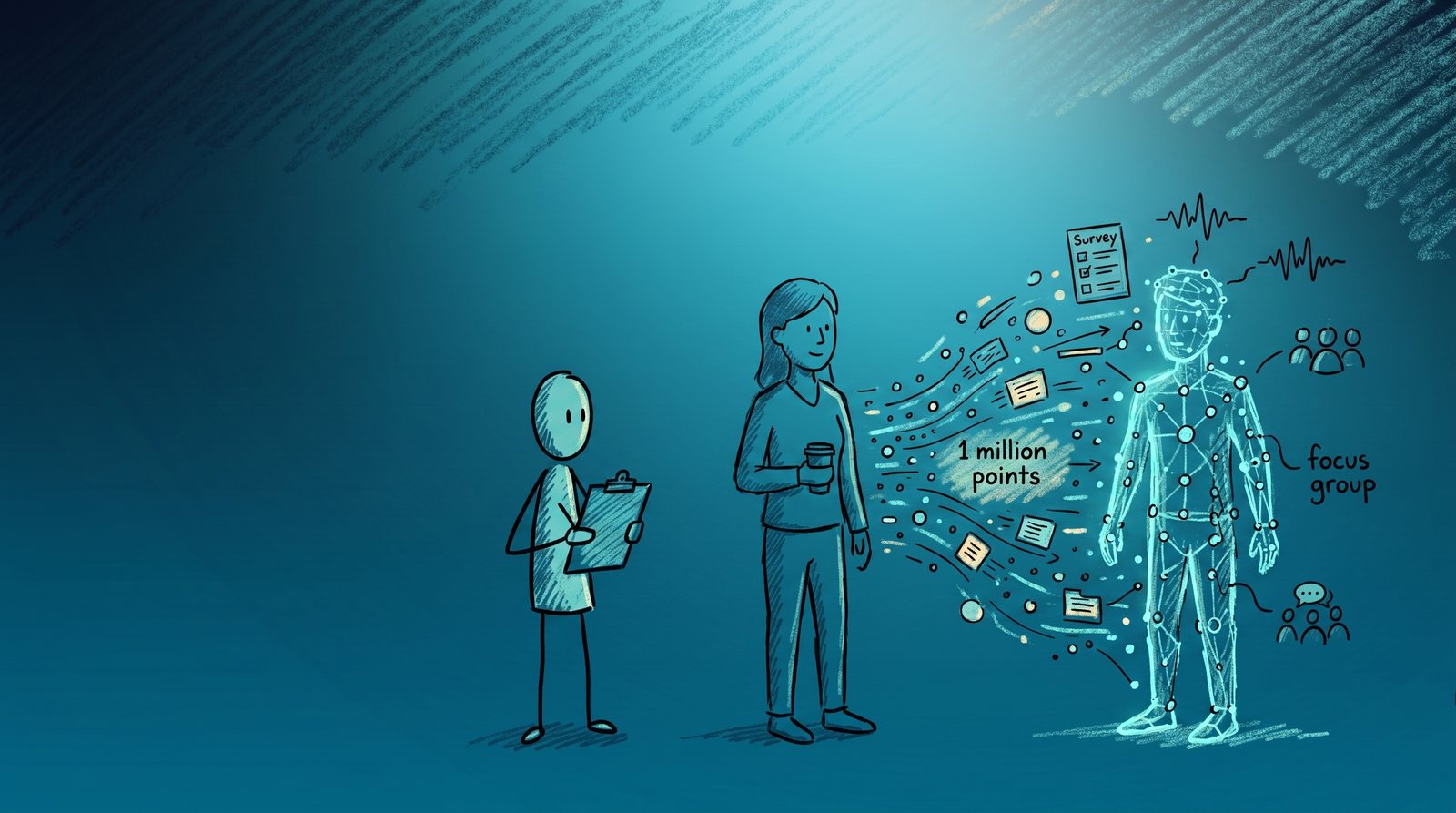
This is exactly where Digital Twins come in. AI-powered synthetic audiences built on more than one million real survey responses. They simulate human response behavior with 80–90 percent accuracy and deliver results in real time. No recruiting, no waiting, no inflated budgets. This guide covers what Digital Twins are, how they work, and how marketers can put them to practical use, including validated case studies and an honest look at the limitations.
What Are Digital Twins?
The term Digital Twin originated in industry: in manufacturing and engineering, it refers to a virtual copy of a physical object, such as a turbine or an entire factory. This digital replica is fed sensor data to predict wear and optimize processes.
In market research, Digital Twin means something different, yet fundamentally similar. Here the term stands for AI-generated, synthetic audience profiles grounded in real survey data. Instead of a machine, a person, or more precisely, an entire consumer segment, is digitally replicated.
An important distinction: a Digital Twin is not a chatbot pretending to be a 35-year-old mother from Munich. It is a statistically grounded model based on real response patterns from hundreds of thousands of actual people. The foundation consists of more than 1 million real survey responses, each capturing 68 to 250 data points per profile, from demographics and psychographic attitudes to concrete consumer behavior.
This sets the approach fundamentally apart from generic AI personas: while a chatbot answers based on its training corpus, often reproducing cultural stereotypes, Digital Twins draw on a verified, empirical data foundation. The result is responses that are not just plausible-sounding but statistically robust.
How Do Digital Twins Work in Market Research?
The technology behind Digital Twins combines classical survey research with modern AI methods. The process breaks down into four steps:
Step 1: The Data Foundation: Over 1 Million Real Survey Responses
Everything starts with real people. The foundation is a database of more than one million real survey responses, collected according to scientific standards. This data does not come from social media scraping or web crawling, but from structured surveys using validated measurement instruments.
Step 2: Psychographic Profiling
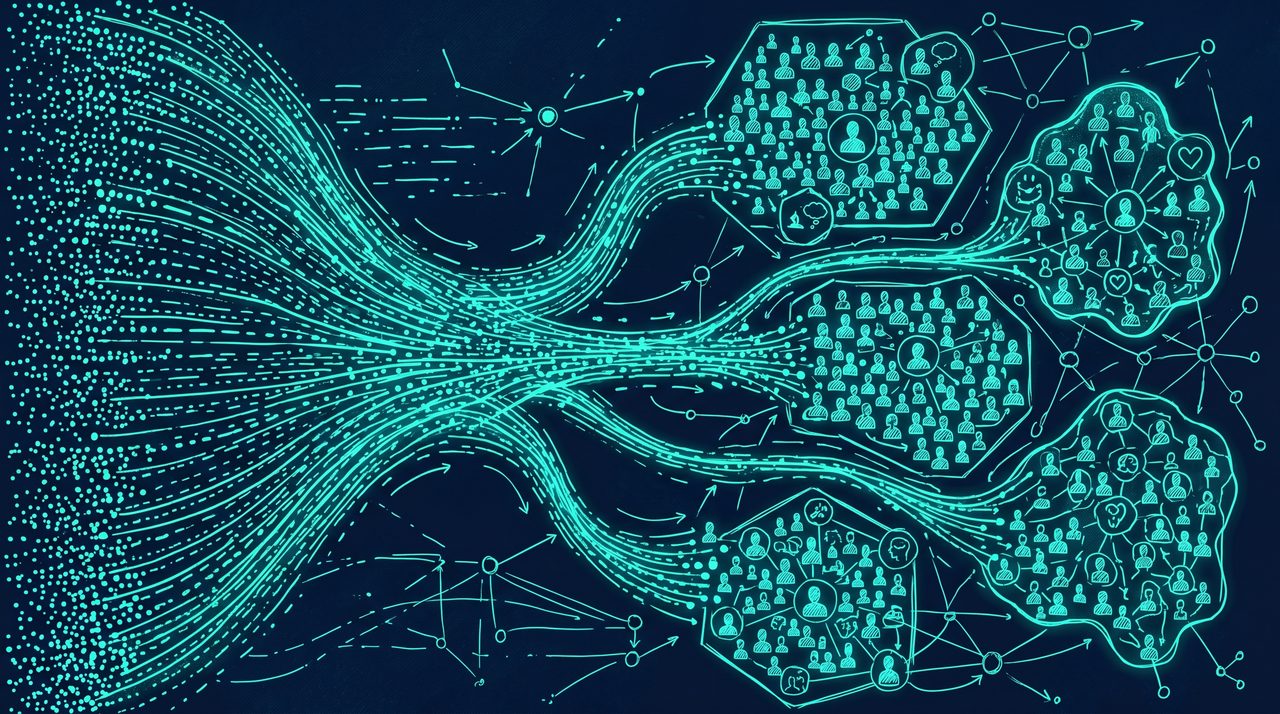
Each respondent is profiled using 68 to 250 data points. This covers not only age, gender, and income, but also values, attitudes, purchase motivations, media usage, and brand preferences. From this data, over one million psychographic profiles emerge, the foundation of the synthetic audiences.
Step 3: Semantic Matching
When a question is posed to the Digital Twins, semantic vector matching takes place: the AI identifies the profiles most relevant to the query from the database. Ask about attitudes toward sustainable packaging among young parents, and profiles with matching demographic and psychographic characteristics are specifically selected.
Step 4: AI-Powered Response Generation
In the final step, an LLM (Large Language Model) generates the responses, not invented from thin air, but grounded in real data. The model synthesizes the matched profiles and produces answers that correspond to the actual response behavior of the underlying individuals. A database of over 20 million real user queries serves as an additional validation layer.
For comparison: a traditional focus group requires 2-6 weeks of lead time, costs EUR 10,000 or more, and delivers opinions from 8-12 participants. Digital Twins provide comparable insights in minutes, drawn from a pool of over one million profiles, at a fraction of the cost.
Want to see Digital Twins in action? In the keynote “Digital Twins: The Future of Market Research,” a live demo with real data shows exactly how it works. Submit a speaker inquiry
5 Use Cases for Marketers
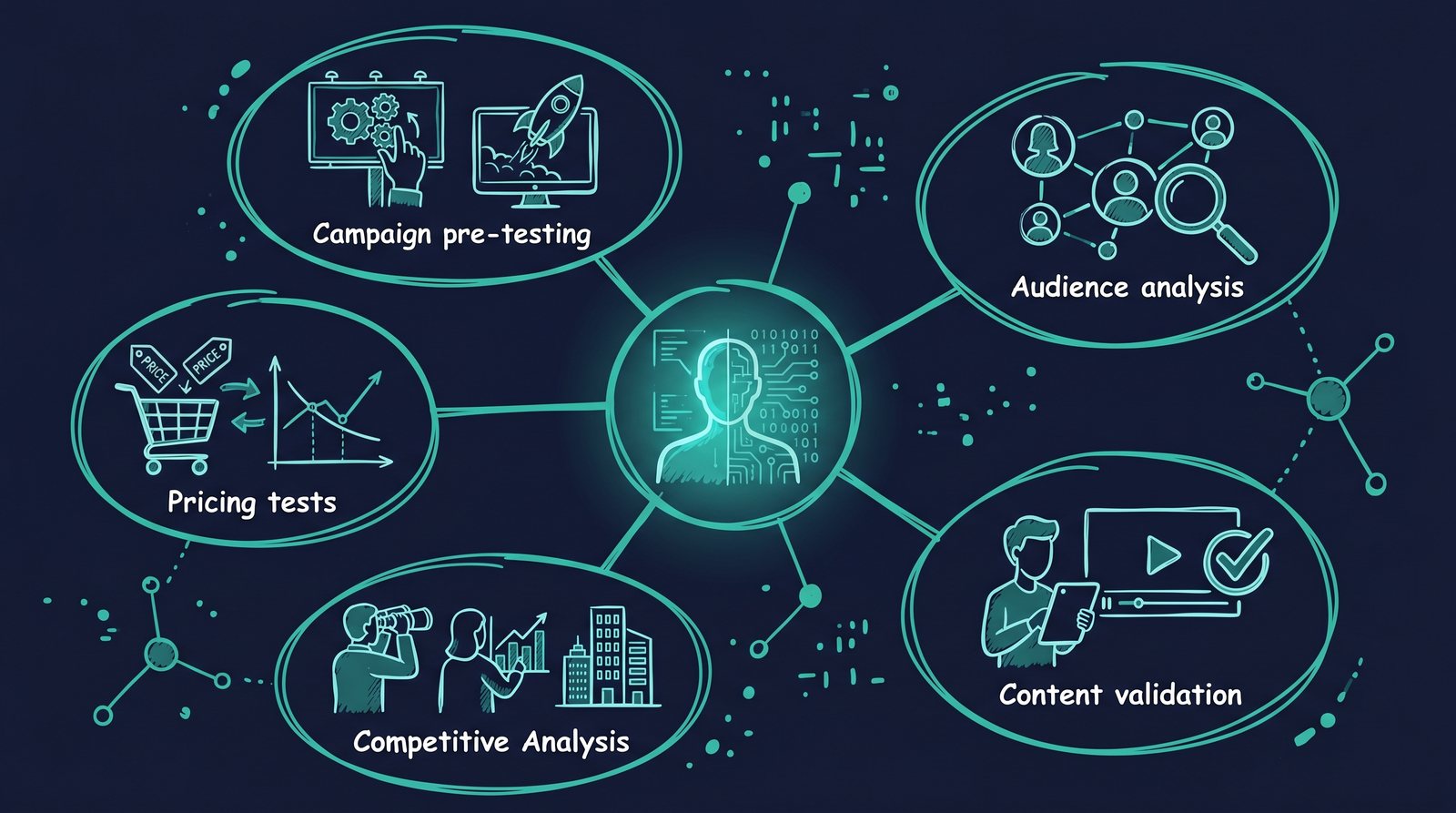
Digital Twins are not a theoretical concept: they solve very real problems in day-to-day marketing. Here are five use cases with the greatest impact:
1. Pre-Testing Campaigns and Messaging
Before committing budget to a campaign, different messages, claims, and slogans can be tested on synthetic audiences. Which headline generates more attention? Which tone resonates better with the target audience: rational or emotional? Digital Twins deliver qualitative feedback within minutes that previously required expensive A/B tests. This not only saves money but significantly reduces the risk of failed campaigns.
2. Audience Analysis Without Surveys
Launching in a new market and need a quick read on the target audience? Digital Twins can deliver psychographic profiles of ideal customers, including purchase motivations, values, and media usage. No questionnaire design, no panel recruitment, no weeks of fieldwork. Especially valuable for agile teams that need to iterate quickly.
3. Content Validation Before Publication
Whether blog post, social media update, or whitepaper: content can be evaluated by synthetic audiences before it goes live. Does the target audience understand the core message? Is the tone appropriate? Are there blind spots? This is particularly useful for companies communicating across multiple markets that need to account for cultural differences. Digital Twins also provide valuable signals for AI visibility of content.
4. Competitive Analysis from the Customer’s Perspective
What do consumers really think about a brand compared to the competition? Digital Twins can simulate brand perception, without commissioning an elaborate market research study. The result: insights into how positioning compares to competitors, which attributes are associated with the brand, and where differentiation potential lies.
5. Brand Positioning and Pricing Tests
How much would the target audience pay for a new product? Which positioning resonates more: premium or value? Digital Twins enable rapid pricing sensitivity tests and positioning comparisons that traditionally take weeks and cost tens of thousands of euros. For product launches and rebranding projects, this represents an enormous time advantage.
Digital Twins vs. Traditional Market Research
| Criterion | Traditional Market Research | Digital Twins |
|---|---|---|
| Speed | 2-6 weeks | Minutes to hours |
| Cost | EUR 10,000-50,000 | A fraction of that |
| Sample size | 100-1,000 participants | From 1M+ profiles |
| Repeatability | New recruitment required | Instantly repeatable |
| Accuracy | Gold standard (but expensive) | 80–90% agreement |
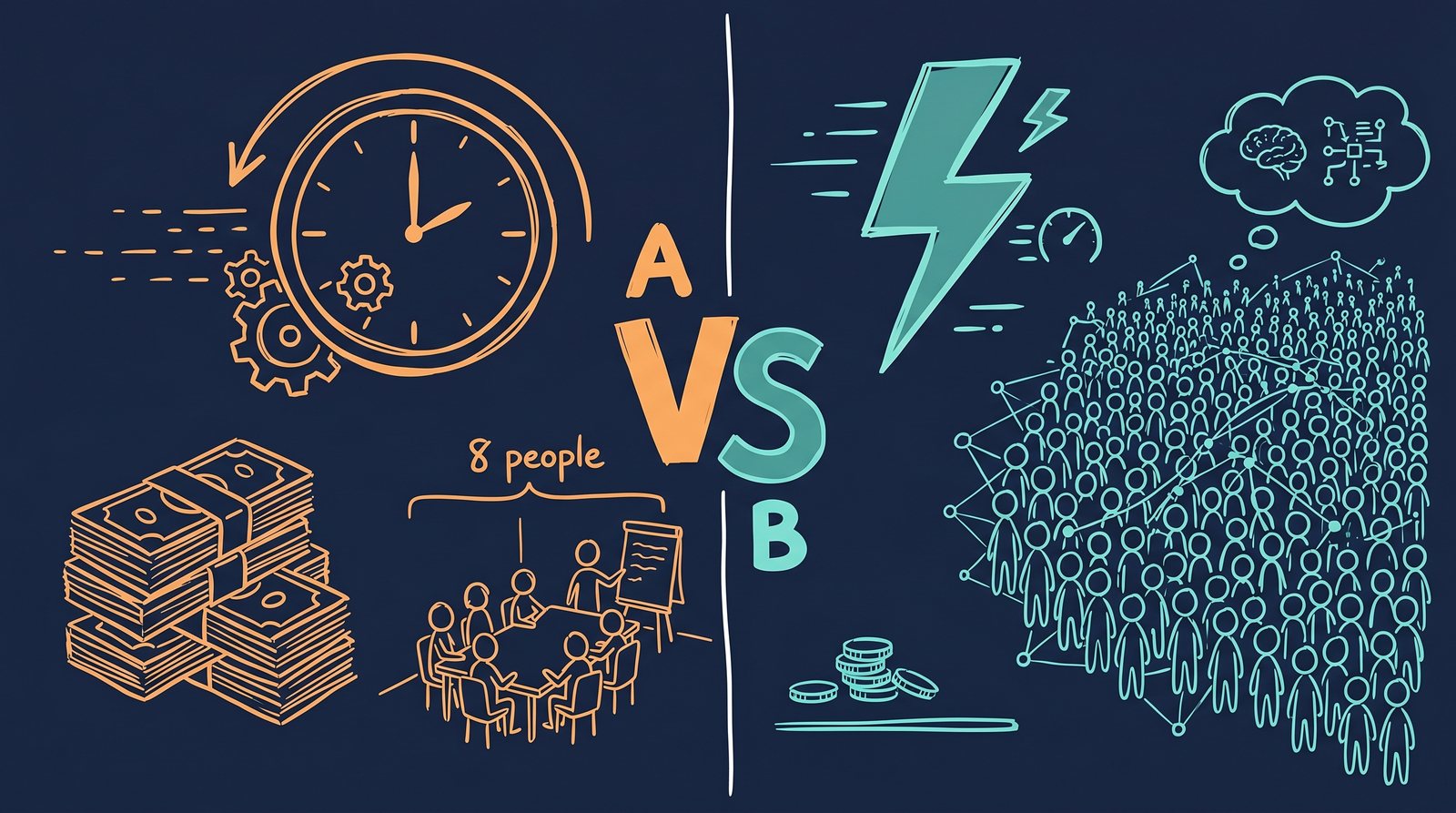
Does this mean Digital Twins replace traditional market research? No. Both approaches have their strengths. Traditional methods remain the gold standard for exploratory deep research, highly sensitive topics, or regulatory-required primary data. Digital Twins excel where speed and scalability are decisive.
The smartest approach is hybrid: Digital Twins for screening and shortlisting, human surveys for validation and deep dives. Test ten concepts quickly with Digital Twins, identify the three strongest, then validate those with a traditional panel. This saves 70–80 percent of the budget, with comparable result quality.
For conference organizers: This topic captivates both marketing and tech audiences. The keynote includes an interactive live demo: the audience tests Digital Twins in real time. Book a keynote
Validation: How Accurate Are Digital Twins?
Every new method must be measured against reality. That is why Digital Twin responses have been systematically compared with real panel surveys. Two case studies illustrate the results:
Case Study 1: Oetinger Verlag
In a comparison test, Digital Twins delivered answers that matched the results of a human panel to 92 percent. The study covered questions on brand preference and purchase decisions in the publishing industry.
Case Study 2: Essity
Even more impressive were the results for Essity, one of the world’s leading hygiene and health companies: here, agreement reached 98 percent. The synthetic responses were virtually indistinguishable from real panel data.
Why Does Accuracy Vary?
Agreement depends on several factors: the more standardized the topic and the broader the target audience, the higher the accuracy. For niche topics or very specific subgroups, the hit rate may decrease. Cultural nuances that are underrepresented in the training database can also lead to deviations.
An honest assessment: Digital Twins are not a silver bullet. They are particularly strong for quantifiable attitude and preference questions. For open-ended, exploratory questions, such as “What would I wish for from a brand that doesn’t even exist yet?”, they reach their limits. ESOMAR guidelines on ethical market research must also be considered when using synthetic data.
Sources & Further Reading
External Sources
- Wikipedia: Digital Twin, Foundational knowledge on the concept
- Gartner: Digital Twins, Technology forecasts and market assessments
- McKinsey: The State of AI, Overview of AI adoption in business
- ESOMAR: Code & Guidelines, Ethical standards for market research
- Argyle et al. (2023): Out of One, Many, Using Language Models to Simulate Human Samples, Academic study on synthetic survey data
- Nature Human Behaviour: LLMs as Simulated Economic Agents, Research on the validity of AI-simulated responses
- neuroflash, Platform for AI-powered market research with Digital Twins
Related Articles on jonathanmall.com
- Recommended or Invisible: Why AI Search Has No Middle Ground
- From Chatbot to AI Operating System
- The Great AI Visibility Check: VW vs. Skoda
- 27 Principles for AI Agents
Planning an event on AI and market research? As a neuropsychologist and co-founder of neuroflash, Dr. Jonathan Mall explains Digital Twins with a live demo, real-world examples, and a touch of consumer psychology. Submit a speaker inquiry
Combining Digital Twins with traditional market research
Digital Twins do not replace human market research. They make it faster, more affordable, and more accessible. For marketers, synthetic audiences mean that consumer insights are no longer a luxury reserved for major campaigns. Instead, audiences can be surveyed, messages tested, and positioning validated whenever needed, in minutes rather than weeks.
The future of AI-powered market research lies in combination: Digital Twins for speed and scale, traditional methods for depth and validation. Those who adopt this hybrid strategy early gain a genuine competitive advantage in a world where data-driven decisions must be made ever faster.
Want to learn more? Book a Digital Twins keynote, and discover how synthetic audiences can transform your market research.
About the author: Dr. Jonathan T. Mall is a cognitive psychologist (PhD, RUG 2013), CIO, and co-founder of neuroflash. He combines 20+ years of experience at the intersection of neuroscience, AI, and marketing. As a keynote speaker, he explains why consumers buy the way they do, and how AI can predict it, often live on stage with the same Digital Twins demos covered in this guide; you can book an AI keynote speaker for your own event. Contact: jonathanmall.com · LinkedIn.
Frequently Asked Questions
What is a digital twin in marketing?
A digital twin is an AI-generated synthetic audience grounded in real survey data, not a chatbot pretending to be a person. It predicts how a defined audience reacts to your messaging, campaigns or pricing within minutes.
How accurate are digital twins?
They reach 80 to 90% agreement with real human panels. In case studies, Oetinger Verlag hit 92% and Essity reached 98% agreement, making them reliable for pre-testing before you commit budget.
Do digital twins replace traditional market research?
No. They make research faster, cheaper and more accessible, ideal for early validation. A hybrid approach, combining twins with human studies, can cut research costs by 70 to 80% while keeping quality high.