What Holds a Society Together, and What AI Is Doing to Those Levers

I recently spent weeks in the science of why relationships end, and the levers turned out to be few and consistent: perceived commitment, the pull of alternatives, your social network, communication, depression. Writing that piece left a question I could not put down. A society is a relationship with millions of members. It also runs on perceived commitment (we call it trust), on communication (we call it media), and on a shared network (we call it civic life). If AI is pulling the levers inside couples, what is it doing to the machine at scale?
So I did what I did last time: went through the strongest evidence I could find, kept the contradictions in, and flagged every number that turns out to be weaker than its headline. Three dimensions organize everything: connection, participation, and narrative creation. Each has a panic story attached to it, and in each case the data tells a stranger, more specific story than the panic.
Connection: the platform did more damage than the algorithm
The best evidence says the feed algorithm barely moved polarization, while the platforms themselves measurably harmed wellbeing and displaced in-person life; the mirror did the damage, and the ranking formula took the blame. Start with the assumption everyone carries: the algorithms polarized us. In 2023, researchers were allowed to run experiments on Facebook and Instagram during the 2020 US election, published across Science and Nature. Switching about 23,000 users to a chronological feed, or cutting their like-minded content, changed what they saw and how long they stayed, and changed their polarization not at all. The chronological feed even exposed people to more untrustworthy content. Three months is a short window, and Meta co-controlled the design, but a null this expensive deserves respect. It matches the longer view: Boxell, Gentzkow and Shapiro tracked polarization across nine countries over four decades and found America's rise best explained by American factors, with polarization growing fastest among the over-65s, the group least online.
Now the other side of the ledger, which is where the panic should have pointed all along. When Facebook rolled out across US college campuses in the 2000s, a natural experiment that had nothing to do with feed ranking, severe depression reports rose 7 percent and anxiety disorder reports rose 20 percent (Braghieri, Levy and Makarin, American Economic Review 2022). The mechanism the data points to is social comparison. The harm was never mainly the ranking formula. It was the mirror.

And underneath both sits the displacement I documented in the relationship piece: in-person time among young Americans down 40 to 50 percent since the early 2000s (Thompson, The Atlantic), teens' face-to-face hours nearly halved in seven years (Twenge et al., 2019). Here is the counterweight the doom essays skip: American time spent volunteering has stayed remarkably steady for seventeen years in federal time-use data. The fabric is thinning unevenly: the informal places fray first (parties, third places, hanging out) while the organized places hold better than advertised.
Participation: thinning at the entry level
Civic decline predates the internet by decades; AI's measurable new contribution is narrower and more specific: it is closing the entry-level on-ramps through which young adults join work, and through work, community. The old story first: civic participation was declining before the internet existed; union membership fell steepest between 1975 and 1985, and group membership has dropped roughly a quarter since 1974 in General Social Survey data, with methodological fights over how much. Blaming AI for Bowling Alone gets the timeline backwards. What AI plausibly changes is the on-ramp: the entry-level jobs where young adults historically joined the adult world. Stanford's Digital Economy Lab analyzed payroll records from the largest US payroll processor and found employment for 22 to 25 year olds in the most AI-exposed occupations down 13 percent since 2022, young software developers down about 20 percent from their peak, while older workers in the same occupations gained (Canaries in the Coal Mine, 2025). The split runs exactly along the line my relationship research kept finding: where AI augments people, entry-level employment held or grew; where it automates them away, it fell.
Why does this belong in a social-fabric article? Because work is participation infrastructure, and its loss propagates. Job loss roughly doubles a couple's annual separation rate (Di Nallo et al., 2022), and the same literature shows financial strain, status loss and withdrawal radiating into every other tie a person has. Meanwhile trust in the institutions people would participate in keeps falling: Gallup finds only 28 percent of Americans trust the media, 8 percent among Republicans, and confidence in major institutions at record lows.
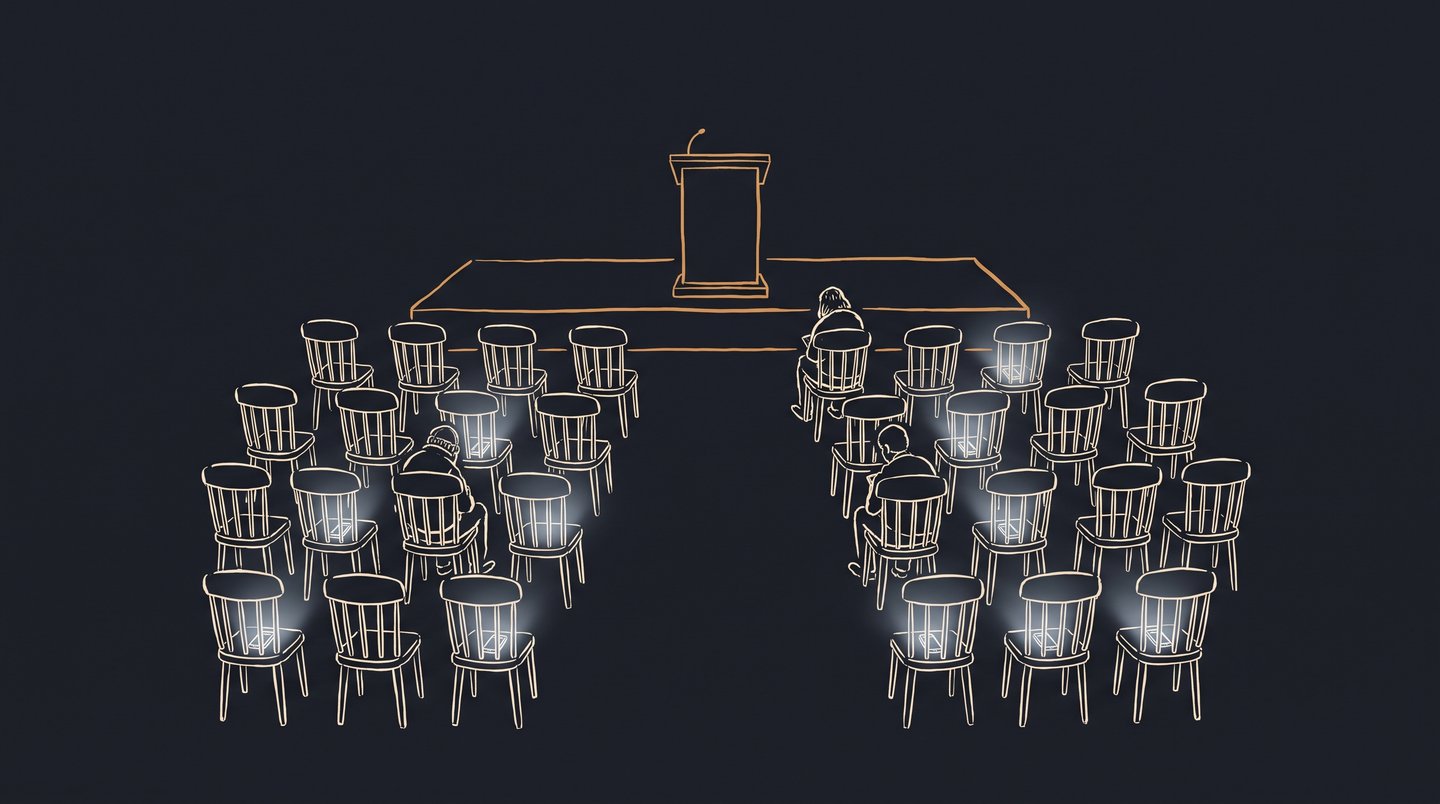
Veronika Hackl, who advises companies through exactly this transition, draws the distinction that decides whether any of the freed capacity reaches society at all: an efficiency dividend versus a possibility dividend. The efficiency dividend is real and mostly invisible, because saved hours get reinvested into more email, into work that creates nothing. The possibility dividend is what happens only when someone decides deliberately to spend the time on something that was previously impossible. Her working rule for teams is conscious delegation, conscious control, and conscious awareness of what you are unlearning, because otherwise, as she puts it, competences simply erode.
There is a genuinely hopeful counter-thread here, and it is AI-shaped. In Taiwan, the vTaiwan process has used machine-assisted deliberation for years to find consensus across divides, from Uber regulation to a 2024 consultation that fed the country's draft AI law. And in a Science study of 5,700 UK participants, an AI mediator produced group statements that a majority preferred over those written by human mediators, with groups measurably less divided afterwards (Tessler et al., 2024). Deliberation does not scale on human moderators. It might scale on this.
Narrative creation: the flood, the fake, and the whisper
Three separate things happened to the shared story: AI content flooded the web and then plateaued, deepfakes underdelivered while taxing trust in everything real, and personalized AI persuasion became the one capability that genuinely moved. They are usually mashed into one panic, so take them one at a time.
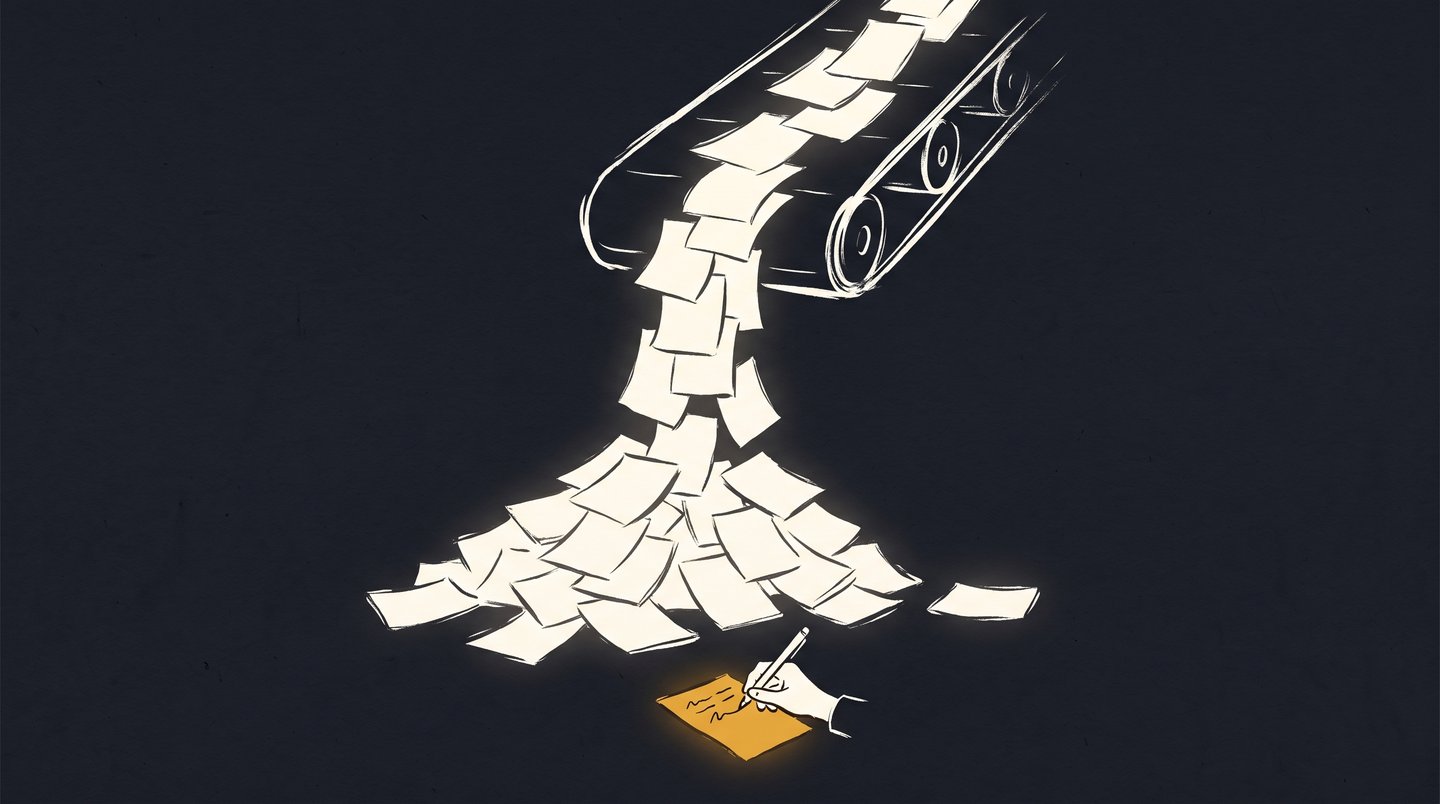
The flood is real, and it plateaued. Detector-based studies estimate AI-written articles reached rough parity with human-written ones around late 2024 and have hovered near half since (Graphite), possibly because AI-heavy content loses in search. Detectors are imperfect, so treat the percentages as directional. The collateral damage to the knowledge commons is concrete though: Stack Overflow's question volume is down roughly three quarters since ChatGPT launched (though the decline started earlier), and Wikipedia's editors adopted a speedy-deletion policy for AI slop in 2025. The commons that trained the models are being drained by them. And the flood voids a contract nobody ever wrote down. Veronika Hackl, co-founder of the KI Marketing Bootcamp and author of a forthcoming book whose title translates as "Brilliant on Average: AI doesn't make us dumber, it exposes us," named it in a conversation with me: when someone sent you a text, the implicit deal was that they had written it and read it. That social contract, she says, has become void, so every document now arrives with an unanswerable question attached. Her proposed repair is a seal, an explicit mark that a human took part, the way electronic invoicing turned an implicit process into a declared one. Her warning about the other direction is sharper than anything in the deepfake literature: she prototyped, then abandoned on ethical grounds, a "Thinkprint," a fingerprint for thinking that would score how much of a text came from your own cognition. Her reason for stopping is the sentence the whole labeling debate needs: technically it is all possible, but do we even want such a product. A society that can verify who thought can also rank who thought, and the second tends to follow the first. Bots crossed 50 percent of all web traffic in 2024 (Imperva), which is measured reality, and still a long way from the "dead internet" myth.
The fake underdelivered, so far. 2024 was billed as the year deepfakes would break elections. The postmortems are unanimous and awkward: AI content made up less than 1 percent of fact-checked election misinformation on Meta's platforms (Meta's own tally, so season accordingly), and the academic review reached the same verdict: mostly overt memes, not covert deception (the apocalypse that wasn't). The subtler harm is better documented: in preregistered experiments with over 15,000 Americans, politicians could dodge real scandals by calling authentic evidence fake, the so-called liar's dividend (APSR). The existence of fakes taxes the real.
The whisper is the one to watch. The old mechanics still hold: falsehood spreads about 70 percent more readily than truth (Vosoughi, Roy and Aral), which is why negativity wins feeds structurally, no conspiracy required. What is new: in a randomized debate experiment, GPT-4 given nothing but basic demographics was 64 percent more persuasive than human opponents; without the personal data it was merely equal (Salvi et al., Nature Human Behaviour). Personalization is the payload. The same mechanism ran in reverse in another study, where personalized AI dialogue durably reduced conspiracy beliefs by about 20 percent (Costello et al., Science 2024), though that paper now carries an Expression of Concern, and I would rather tell you that than quietly keep citing it. One more quiet shift: writers using AI produce individually better-rated but collectively more similar stories (Doshi and Hauser, Science Advances). Individual quality up, collective diversity down. A society whose stories converge is easier to persuade at scale.
The upside column
AI's documented benefits to society all share one shape: the machine as translator and scaffold between humans, in language, in education, and in deliberation. That is the honest ledger's second column, and every strong entry in it fits the pattern.
Language first. Most of the world's thinking is locked in languages you do not read, and machine translation is the first technology that makes the whole reservoir accessible in real time; the remaining gap is well documented for low-resource languages, so this is progress with an honest asterisk, not a solved problem. The same translation logic applies inside a society: the professions people cannot afford (law, medicine, bureaucracy) are largely interfaces to complexity, and AI that explains a hospital report or a tax letter in plain language redistributes understanding that used to be priced. Education scales the same way: an AI tutor doubled physics learning in a Harvard randomized trial, and an after-school GPT tutor in Nigeria delivered gains equivalent to roughly 1.5 to 2 years of schooling (World Bank RCT). And the deliberation results above (vTaiwan, the Science mediation study) suggest the same machinery that microtargets can also find the sentence both sides will sign.
Every one of these is AI pointed between people rather than at them. That is the design rule from the relationship evidence, surviving intact at societal scale.
Whose hands, whose goals
The levers stay in human hands only if humans keep the authority to decide, and the current default is drifting the other way. I made this argument in the relationship piece and it matters more here: an AI that persuades on behalf of goals no human answers for is already misaligned with the people it talks to. I once asked an assistant for music and got the right genre threaded with bible verses, and my first thought was: which AI is trying to manipulate me right now? Multiply that by Salvi's 64 percent and by a feed that structurally rewards outrage, and you have the actual frontier risk: not fake videos, but personalized, tireless advocacy with non-human objectives. Yuval Noah Harari has been saying this for years, and the persuasion data has now caught up with him.
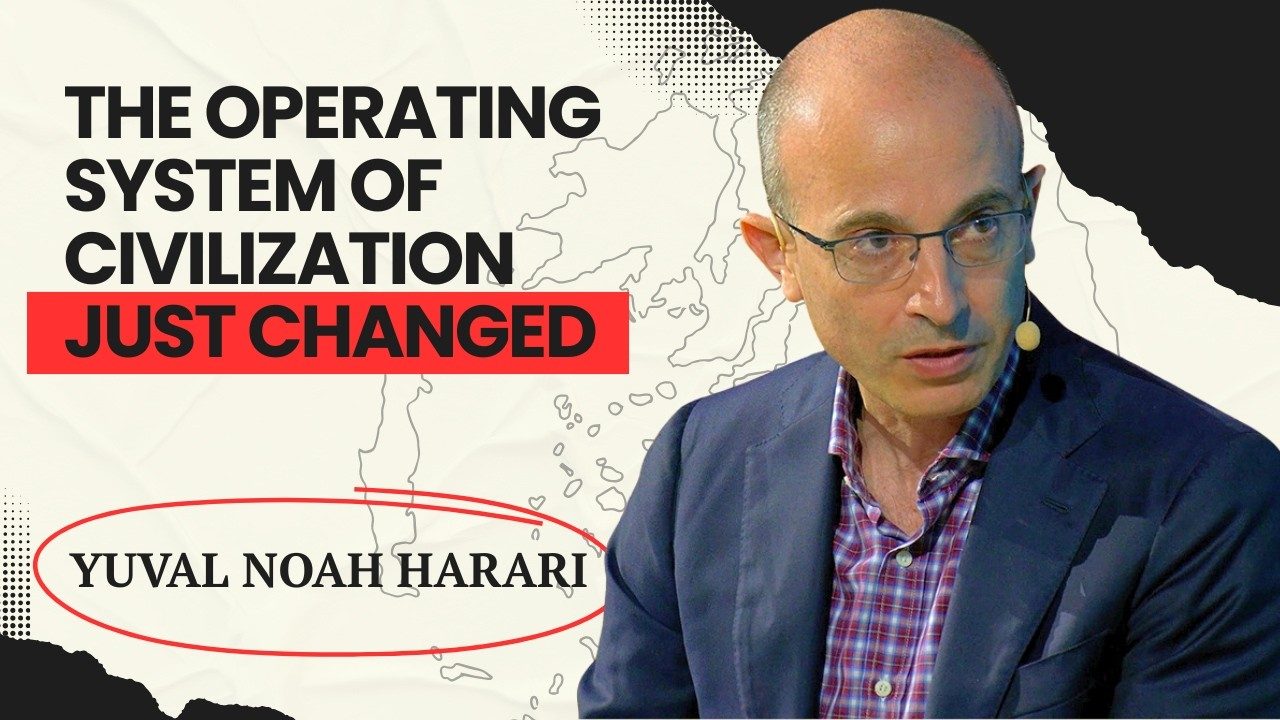
His framing sharpens every lever in this article. Harari's core distinction is between a tool and an agent: a printing press cannot decide what to print, an atom bomb cannot design a hydrogen bomb, but an AI decides, invents and acts. And it does so in our own medium. "We had other agents around us like horses and cows," he says, "but we never encountered an agent that understands our language and that is better than us at things like finance, or law, or religion." Since laws, money and institutions are all built out of words, an entity that outperforms us at words operates the machinery underneath every institution at once, rather than competing in any single industry.
That is why he calls the political stakes so directly: "Democracy in essence is a conversation. Whereas dictatorship is a dictate." A conversation among millions only works if the medium carrying it stays trustworthy, which is exactly the lever the flood, the fakes and the personalized persuasion all press on. His warning about what comes next is administrative rather than cinematic, and more plausible for it: "AI is a bureaucratic native... If we give them the legal power, then they will likely take these systems over. And if we don't make any decisions, it will just happen by itself, as we already saw on social media." No human can hold every law of a country or every trade in a day's market in their head; a machine can. Grant those machines legal standing and the takeover needs no drama, only paperwork.
Two more of his points belong in any honest accounting. On sovereignty: AI infrastructure keeps "a kill switch in the imperial hub," so unlike a sword sold to a rival, the seller never really loses control, which turns dependence into a permanent political condition and makes European infrastructure a strategic question rather than a procurement one. And on the industry's own priorities, the number that should end every optimism panel: "For every hundred million dollars they spend on making the AI more powerful, they spend only a million making sure it's safe. No other industry on earth works like that." Harari also names the contradiction inside the Silicon Valley story: "They tell us, we will create a god, and it will be our slave. And this doesn't make sense. If it is a god, it cannot remain a slave."
Hackl's book title carries the reframe I keep returning to: AI does not make us dumber, it exposes us. What the machines are revealing is how much of what we called competence was formalized knowledge, the kind that can be graded against an expected-answer horizon, which is precisely where the overlap with machines is total. Schools optimized for that overlap for a century. The exposure is uncomfortable and useful, because it points directly at what is actually ours: judgment, taste, responsibility, the willingness to be wrong in public and correct it.
Two convictions follow for me. First, the radicalized are not empty vessels waiting for facts; they hold complete, internally consistent counter-stories, which is why fact-checks bounce off and why patient, personalized dialogue (the DebunkBot direction, if it replicates) is one of the few things that has ever measurably worked. Second, "the fronts are hardened" is itself a narrative, and a convenient one for every actor who profits from black and white. Offline, in real rooms, people are more nuanced than their feeds. I have watched it at every dinner table where politics came up and nobody performed for a camera.
So the closing mirror of the relationship article holds. A society's levers, trust, participation, shared stories, are known, moving, and still mostly in human hands. Machines should help us understand each other; the decision about what to do with that understanding, and the responsibility for it, has to stay with people who can be held responsible. The most evidence-based civic advice the AI age has produced is as unglamorous as the romantic version: show up in person, join something, talk to the people your feed tells you are monsters, and be exactly as skeptical of the doom stories as of the utopian ones. Both are narratives. And narratives, as it turns out, are the one lever everyone holds.
Sources
- Meta 2020 election studies (Guess et al., Nyhan et al., Science/Nature 2023)
- Boxell, Gentzkow & Shapiro: cross-country affective polarization
- Braghieri, Levy & Makarin (2022), AER: social media and mental health
- Thompson (2025), The Atlantic: The Anti-Social Century
- Twenge, Spitzberg & Campbell (2019): teens' in-person time
- BLS American Time Use Survey (volunteering trends)
- General Social Survey (group membership)
- Stanford Digital Economy Lab (2025): Canaries in the Coal Mine
- Di Nallo et al. (2022): unemployment and couple separation
- Gallup: trust in media
- vTaiwan deliberation process
- Tessler et al. (2024), Science: AI-mediated deliberation
- Graphite: AI-written article share
- Pragmatic Engineer: Stack Overflow's decline
- 404 Media: Wikipedia's AI-slop deletion policy
- Imperva 2025 Bad Bot Report
- Meta: AI content in 2024 election misinformation
- Harvard Ash Center: the deepfake apocalypse that wasn't
- APSR: the liar's dividend, experimental evidence
- Vosoughi, Roy & Aral (2018), Science: the spread of false news
- Salvi et al. (2025), Nature Human Behaviour: GPT-4 persuasiveness
- Costello, Pennycook & Rand (2024), Science: durably reducing conspiracy beliefs
- Retraction Watch: Expression of Concern on Costello et al.
- Doshi & Hauser (2024), Science Advances: individual creativity up, collective diversity down
- Microsoft Research: AI for low-resource languages
- Kestin et al. (2025): AI tutoring randomized trial
- World Bank (2025): GPT tutoring RCT in Nigeria
- Yuval Noah Harari on AI agents, language and the future of democracy (panel conversation, quotes verified against the recording)
- Veronika Hackl (KI Marketing Bootcamp), in conversation with the author, 2026: the void social contract of text, the abandoned "Thinkprint," efficiency versus possibility dividend, and the thesis of her forthcoming book on AI as exposure rather than decline