For two decades, I watched neuromarketing from the inside. First as a researcher strapping EEG caps onto study participants in Hamburg, later as a cognitive neuropsychologist trying to bridge the gap between what the brain reveals and what marketers actually need. The promise was always intoxicating: peer directly into the consumer’s mind and know, with scientific precision, what makes them click, buy, or scroll past.
The reality was far messier.
The Lab That Couldn’t Scale
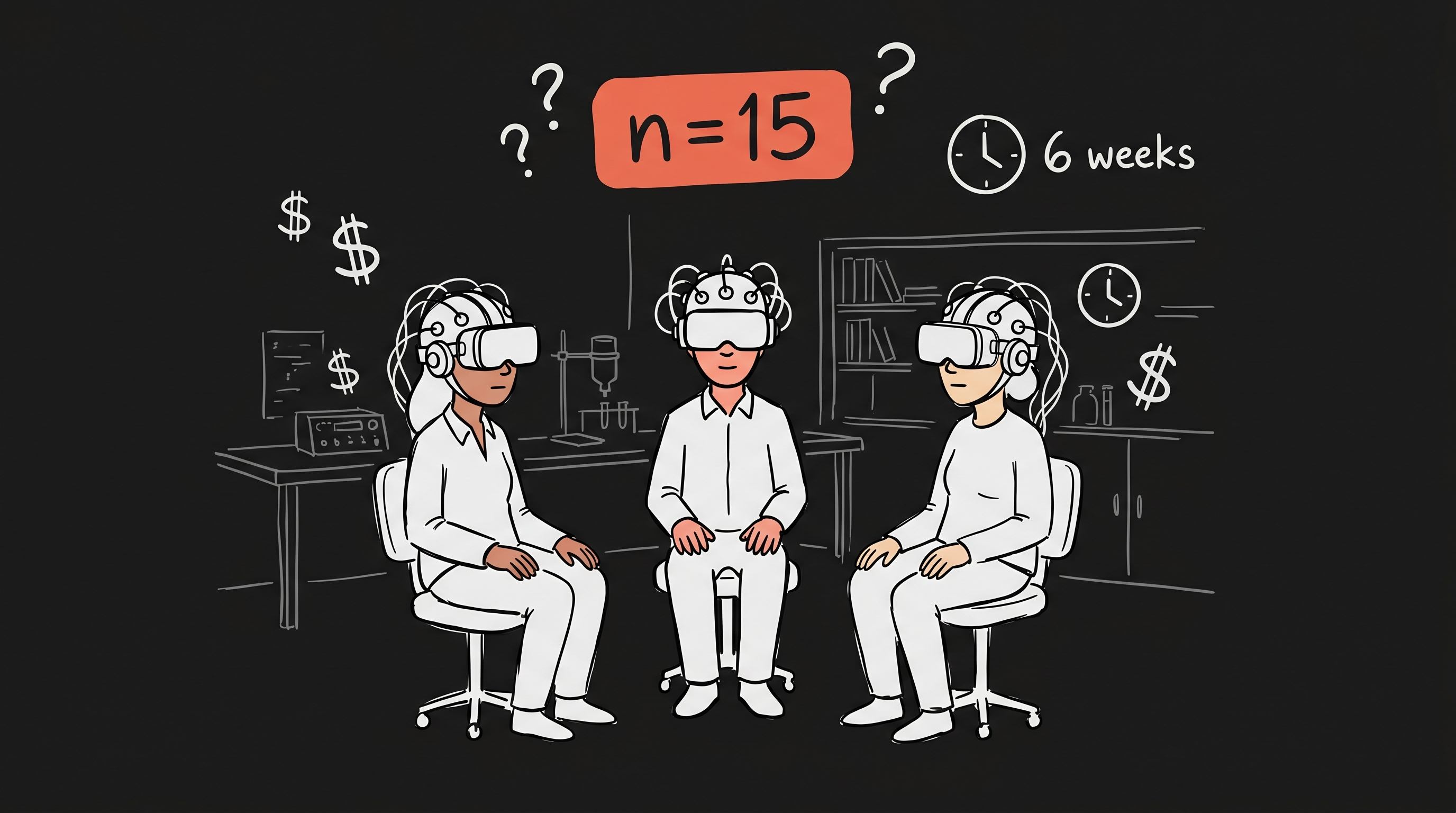
Traditional neuromarketing relied on expensive hardware: electroencephalography (EEG) headsets, functional MRI scanners, eye-tracking rigs, galvanic skin response sensors. A single study could cost tens of thousands of euros. You needed a controlled lab environment, trained technicians, and weeks of recruitment to assemble a panel of 30 to 50 participants.
Even then, the insights were fragile. Lab settings strip away the context that shapes real decisions. Nobody buys a product while sitting in a windowless room with electrodes glued to their scalp. The ecological validity problem haunted every finding: would these neural signals hold up in the wild, where consumers scroll through feeds at breakfast or glance at a billboard during a commute?
Small sample sizes compounded the issue. With 40 participants, you could spot broad patterns, but segmenting by age, gender, or cultural background was statistically reckless. Neuromarketing had powerful tools but couldn’t deploy them at the speed and scale that modern marketing demands.
From Neurons to Neural Networks
The turning point came when we stopped trying to measure brains in real time and started modeling how brains decide instead. At neuroflash, we asked a different question: what if we trained AI models on the actual decision data that traditional studies produce, and then used those models to predict outcomes without requiring a single new participant?
That is the idea behind Digital Twins: AI representations of target audiences, built on more than one million real survey responses encompassing 68 to 250 data points per respondent. These aren’t chatbots wearing a demographic label. They are statistical models grounded in how real people across specific psychographic segments actually think, feel, and choose.
The mechanics are straightforward in principle. We feed the models verified behavioral data, survey responses, and preference signals. The resulting Digital Twin can then be queried: “How would a 35-year-old sustainability-conscious parent in Munich react to this headline?” The twin responds not with a guess, but with a prediction rooted in patterns drawn from over a million data points.
Three Use Cases That Changed My Mind
I was skeptical at first. Any scientist should be. But three applications convinced me that AI-powered prediction is not just a shortcut; it is a genuine evolution of the discipline.
1. Pre-Testing Headlines Before Publication
A consumer brand we work with used to publish blog posts and social ads, then wait days or weeks to learn which headlines drove engagement. With Digital Twins, they now test 10 headline variants in under a minute. The system predicts click-through likelihood, emotional valence, and clarity across three audience segments simultaneously. The result: a 22 percent increase in average engagement within the first quarter of adoption. No lab, no panel, no waiting.
2. Predicting Emotional Resonance of Ad Creative
Emotion is the currency of advertising, but measuring it has always been expensive. Eye-tracking tells you where someone looks; EEG tells you how aroused their brain is. Neither tells you reliably whether the viewer feels trust, excitement, or anxiety. Digital Twins evaluate creative assets against psychographic profiles that encode emotional response patterns. One European retailer used this approach to pre-screen 60 ad variants for a holiday campaign, narrowing the set to 8 finalists that outperformed the previous year’s creative by 31 percent on brand recall.
3. Validating Brand Messaging Across Demographics
Global brands face a persistent challenge: messaging that resonates with Gen Z in Berlin may fall flat with Baby Boomers in Dallas. Traditional research handles this by running separate panels in each market, a process that takes months and costs six figures. Digital Twins compress this into hours. You define the demographic and psychographic parameters, run the same message through each twin, and receive a comparative report that highlights where the message works and where it fractures. One B2B technology company discovered that a tagline their leadership loved scored well with senior decision-makers but generated confusion among mid-level managers, the very people who initiate the buying process. They revised the tagline before launch and avoided a costly misfire.
Planning an event on AI and neuromarketing? Book Jonathan Mall as keynote speaker — talks on AI, neuromarketing, and digital twins.
The Validation Question
Prediction without validation is just guessing with extra steps. This is the question I get asked most often, and rightly so. We have benchmarked Digital Twin outputs against real human panels repeatedly, and the correlation sits consistently in the 80 to 85 percent range. That means the AI’s predictions align with actual human responses more than four times out of five.
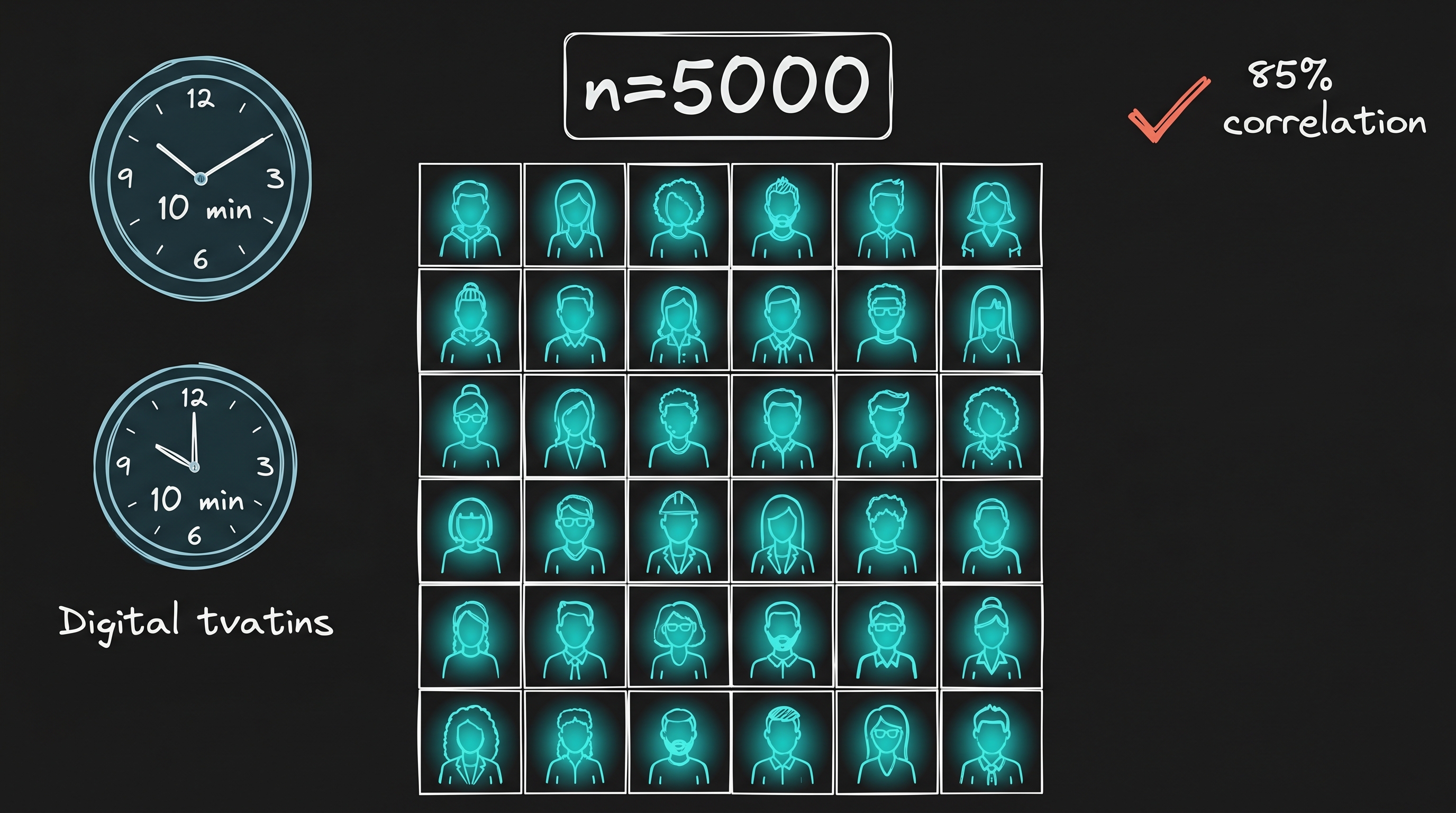
Is that perfect? No. But consider the alternative. A traditional neuromarketing study gives you high precision for a tiny sample that may not represent your actual audience. Digital Twins give you strong predictive accuracy across large, segmented populations in a fraction of the time and cost. For iterative decisions, the ones marketers make every day, this tradeoff is overwhelmingly favorable.
Planning an event on predictive audience intelligence? Book Jonathan Mall as keynote speaker — talks on AI, neuromarketing, and digital twins.
What AI Still Cannot Do
Intellectual honesty requires stating the limits. Digital Twins are powerful when dealing with established categories, familiar emotional territories, and well-defined audiences. They are less reliable when the question is genuinely novel: a product category that doesn’t yet exist, a cultural shift that hasn’t been captured in survey data, or a deeply personal emotional response that resists statistical modeling.
There are also cultural edge cases. A twin trained predominantly on Western European and North American data will struggle with consumer psychology in markets where decision-making frameworks differ fundamentally. We are actively expanding our data foundations, but transparency about current boundaries matters more than overpromising.
The Future Is in the Algorithm
I spent the first half of my career in the lab. I still believe in the rigor that neuroscience brings to marketing. But the future of neuromarketing isn’t in the lab. It is in the algorithm.
The shift from measurement to prediction mirrors what happened in weather forecasting, drug discovery, and materials science. In each case, AI didn’t replace the underlying science. It made the science operational at a scale that was previously unimaginable. Neuromarketing is undergoing the same transformation.
For marketers, this means that understanding your audience at a psychological level is no longer a luxury reserved for brands with six-figure research budgets. It is becoming accessible, fast, and integrated into the daily workflow. For researchers like me, it means the insights we spent years extracting from small samples can now compound across millions of data points, reaching more people and informing better decisions.
The brain hasn’t changed. But our ability to model how it decides has changed everything.
Related Articles
- From Chatbot to AI Operating System
- AI Onboarding in 10 Steps
- Your Digital Twin as a File System
- 27 Principles for Working with AI Agents
Frequently Asked Questions
What is AI-powered neuromarketing?
AI-powered neuromarketing uses machine learning models trained on real consumer data to predict how target audiences respond to marketing stimuli — without requiring traditional lab equipment like EEG or fMRI scanners.
How accurate are Digital Twins compared to traditional neuromarketing?
Digital Twin predictions correlate with real human panel responses at 80–85% accuracy. While not perfect, they offer strong predictive power at a fraction of the time and cost of traditional lab studies.
Can Digital Twins replace focus groups entirely?
For iterative decisions like headline testing or ad creative evaluation, Digital Twins are faster and more scalable. For exploratory research into entirely new product categories, human panels still add value. The best approach combines both.
Sources & Further Reading
- Kahneman, D. (2011). Thinking, Fast and Slow. Farrar, Straus and Giroux.
- Ariely, D. (2008). Predictably Irrational: The Hidden Forces That Shape Our Decisions. Harper Collins.
- Häusel, H.-G. (2012). Brain View: Warum Kunden kaufen. Haufe Verlag.
- Cialdini, R. B. (2006). Influence: The Psychology of Persuasion. Harper Business.
- Plassmann, H., O’Doherty, J., & Rangel, A. (2007). Orbitofrontal cortex encodes willingness to pay. Journal of Neuroscience, 27(37), 9984–9988.
- Zurawicki, L. (2010). Neuromarketing: Exploring the Brain of the Consumer. Springer.
- Grand View Research (2025). Digital Twin Market Size & Growth Report, 2025–2030.
Dr. Jonathan T. Mall
Cognitive neuropsychologist, AI entrepreneur, and CIO of neuroflash. Jonathan bridges neuroscience and artificial intelligence to predict how people decide. As a keynote speaker, he explains why we buy irrationally — and how AI can predict it. LinkedIn · Book a keynote
Frequently Asked Questions
How is AI changing neuromarketing?
AI moves neuromarketing from expensive lab experiments to scalable prediction. Instead of measuring a handful of brains, digital twins model decision-making patterns from over a million survey responses, so you can test content cheaply and fast.
How accurate is AI-based neuromarketing?
Digital twin predictions correlate with real human responses in the 80 to 85% range. That makes them strong for early validation, though they still struggle with brand-new categories and non-Western markets.
What results can AI neuromarketing deliver?
Teams using these methods have reported a 22% increase in average engagement and 31% better brand recall. The gains come from testing headlines and emotional resonance before publishing, not after.