Risk Aversion in Procurement: Don’t Get It Wrong Beats Get the Best Deal
B2B decision psychology, tested live with digital twins: proof instead of assertion.
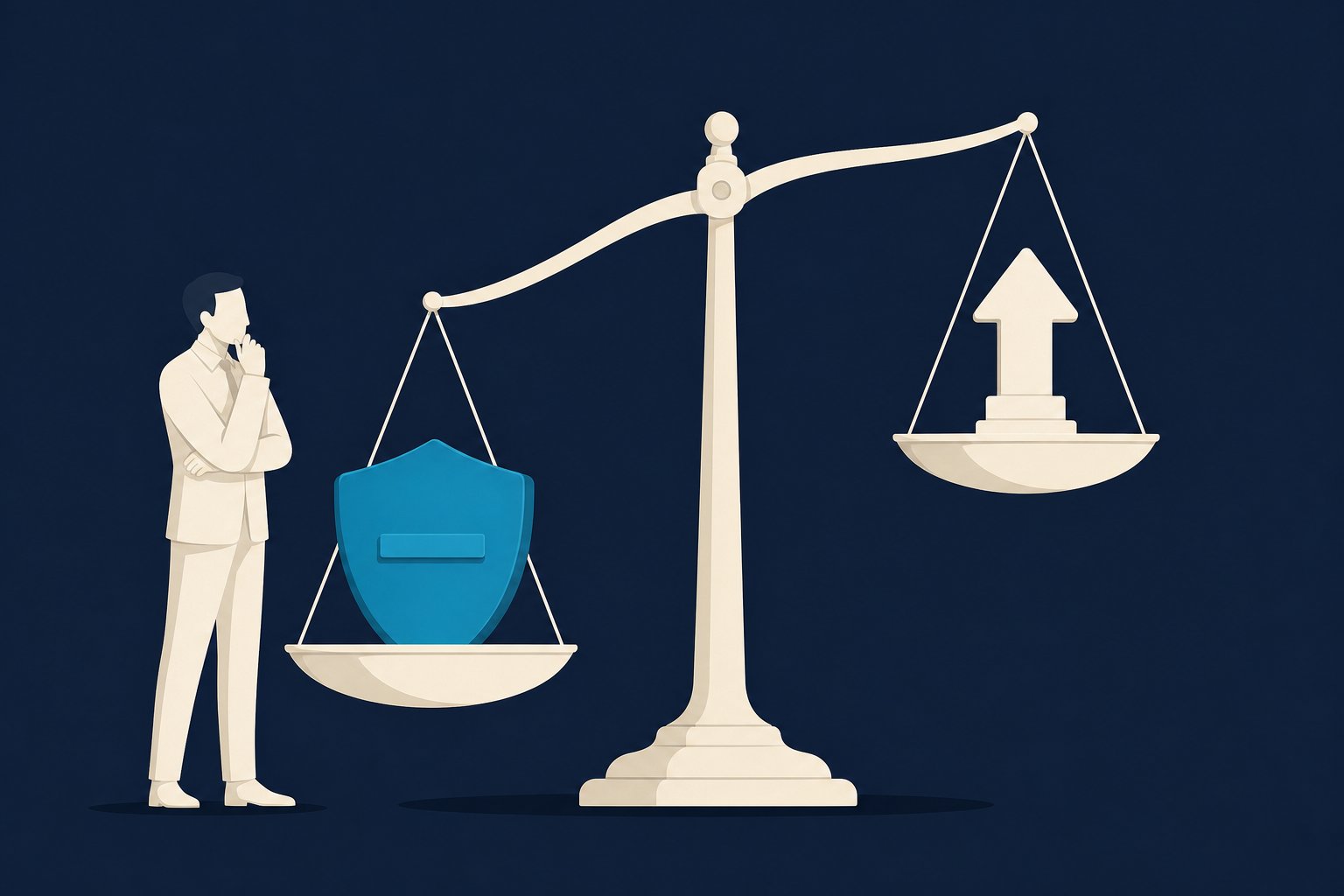
In 1981, Daniel Kahneman and Amos Tversky showed with the famous “Asian disease” experiment that people decide differently depending on whether the same outcome is framed as a gain or a loss. A potential loss weighs psychologically heavier than an equally sized potential gain, the core principle of loss aversion (Kahneman & Tversky, 1979). In procurement, where people are held accountable for bad decisions, this effect should be especially strong. We tested it with digital twins.
Why does fear of loss beat the prospect of gain in procurement?
Whoever owns a budget is rarely celebrated for the best deal, but is reliably held to account for the costly mistake. This asymmetry shapes the decision: an avoided loss is certain and attributable, an additional gain stays hypothetical. That is exactly what loss aversion targets, and why, in procurement, a message that rules out mistakes should pull harder than one that promises benefits.
Rather than just assume it, we measured it. We presented a panel of finance and procurement roles with the same fictional software offer in two text versions. Same product, same price, same numbers. Only the framing differed.
What we tested
Text L · Loss avoidance Winner · 80%
“Avoid the costly mistake: no missed cancellation deadline, no budget overrun, no opaque contract …”
Text G · Gain focus 20%
“Secure your edge: 30% more efficient, get more out of every contract …”
Which framing convinces budget holders?
The loss framing won clearly: in 80% of choices (16 of 20), the twins picked the text that rules out mistakes. In the point allocation, each role split 10 points between the two texts, the loss framing averaged 7.1, the gain framing 2.9.
The reasoning followed the same logic throughout: “Avoiding losses takes priority over potential gains,” writes twin ‘Kathrin’ (Head of Commercial Operations). A CFO twin puts it plainly: “Even though 30% more efficient sounds good. Avoiding losses always matters more to me than the prospect of extra gain.” (All statements are from digital twins, not real people.)
The method:
A panel of 10 digital twins (neuroflash) with finance and procurement profiles (CFO, Finance Director, Head of Procurement, Strategic Sourcing) in the DACH region. The same offer in two framings, in groups of five and in both orders (gain first, loss first). The primary measure is point allocation (10 points split between both texts), the secondary measure is forced choice. 20 usable responses. Limits: digital twins model a panel, not a real procurement department; what was tested was offer language, not an actual contract signature; the results apply to budget holders in procurement, not to “all B2B buyers” broadly. All raw responses are logged per twin.
Is the effect reliable, or just a coincidence of order?
This question is exactly why we asked every role in both argument orders. In an earlier experiment on buying committees, we had seen how strongly the order of arguments alone can shift a choice. Here it was different: whether the gain or the loss framing came first changed nothing about the outcome. In both orders, the choice landed 8 to 2 in favor of the loss framing. The effect carries on its own merit, not on position.
That is the real headline: not every framing effect is stable. In the buying committee, order played a role; in loss aversion in procurement, it did not. Anyone optimizing messaging should therefore know not only which framing wins, but also how robust that edge is, and that can be tested in advance.

Classic study
Tversky & Kahneman (1981): The same outcome framed as a loss moves people more strongly than the same outcome framed as a gain.
Digital Twins (2026)
80% choose the loss framing (7.1 to 2.9 points), and the effect stays stable in both orders.
A classic of decision research, remeasured on the target audience in minutes.

But does that hold for every buyer?
No, and that is the part an average obscures. About one in five budget holders in the test consistently chose the gain framing, in both orders. One twin role (“Head of Finance”) explained it this way: “I appreciate it when the benefit is made clear, not just argued through fear.” For her, the opportunity pulled harder than loss avoidance.
In practice, that means: loss framing is the stronger default when you sell to procurement and finance, but a noticeable share of your contacts are opportunity-oriented. Anyone who wants to reach both groups should test in advance which share in the specific target account leans which way, instead of defaulting to fear across the board. That is exactly what a twin panel is for: it shows you the distribution before the real campaign runs. How reliably twins track reality is covered in the guide to Digital Twins in market research; how they compare to classic focus groups, in the method comparison. That even sober B2B purchases are decided in the emotional system is shown in the article on how AI is changing neuromarketing.
Want to be sure your message lands before you commit the budget? This exact experiment runs live on stage in my keynotes: the audience names the variants, the digital twins decide in real time, decision psychology you can watch happen, rather than a talk read off slides. If you are looking for a speaker who brings the room in for your conference: request an AI keynote with live demos → Fee (mid four-figure range) and availability are listed transparently on the booking page.
Related articles
- B2B Buying Committee Psychology: Why 6-10 Decision-Makers Rarely Agree, when the order of arguments tips the choice.
- Digital Twins in Market Research. The Complete Guide 2026
- Digital Twins vs. Focus Groups. The Method Comparison
Frequently Asked Questions
Does loss framing or gain framing work better in B2B procurement?
In our twin test with finance and procurement roles, the loss framing (“avoid the costly mistake”) won 80% of choices against a content-equivalent gain framing (point allocation 7.1 to 2.9 out of 10). Budget holders weight avoided losses more heavily than equally sized gains.
What is loss aversion in sales?
Loss aversion describes how a potential loss weighs psychologically heavier than an equally sized potential gain (Kahneman & Tversky, 1979). In sales, this means a message that rules out a mistake or a loss often convinces risk-aware buyers more strongly than one that promises a benefit.
Should I always sell with loss framing?
Not across the board. In our test, about one in five budget holders consistently chose the gain framing, an opportunity-oriented segment. Loss framing is the stronger default, but the best approach depends on the specific contact and can be tested in advance.
Can framing effects be tested with digital twins?
Yes. Role-specific twins reproduced classic loss aversion and revealed the distribution, including the opportunity-oriented minority, in minutes instead of weeks. They make the direction and robustness of a framing effect visible in advance, though a real field test remains the final check.
Sources & further reading
- Tversky, A. & Kahneman, D. (1981). The Framing of Decisions and the Psychology of Choice. Science, 211(4481), 453–458.
- Kahneman, D. & Tversky, A. (1979). Prospect Theory: An Analysis of Decision under Risk. Econometrica, 47(2), 263–291.
- neuroflash Digital-Twins experiment P2-2, 2026, Finance/Procurement panel, 10 digital twins, 20 usable responses (DACH).
Test your own framing on the target audience: use role-specific digital twins yourself, via the neuroflash Digital Twins MCP directly in Claude or Cursor, or in your browser at neuroflash.com. Your variants, the same panel principle, results in minutes.
Dr. Jonathan T. Mall
Cognitive neuropsychologist, AI entrepreneur, and Chief Innovation Officer at neuroflash. Jonathan combines 20+ years of experience in neuroscience and AI to predict how people decide. His signature talk “Consumers Buy Weird” explains why we buy irrationally, and how Digital Twins predict it. Anyone who wants to experience these insights live can book an AI keynote with live demos. LinkedIn · Request a keynote