Dan Ariely or Jonathan Mall: Which Keynote Speaker for Your Event?
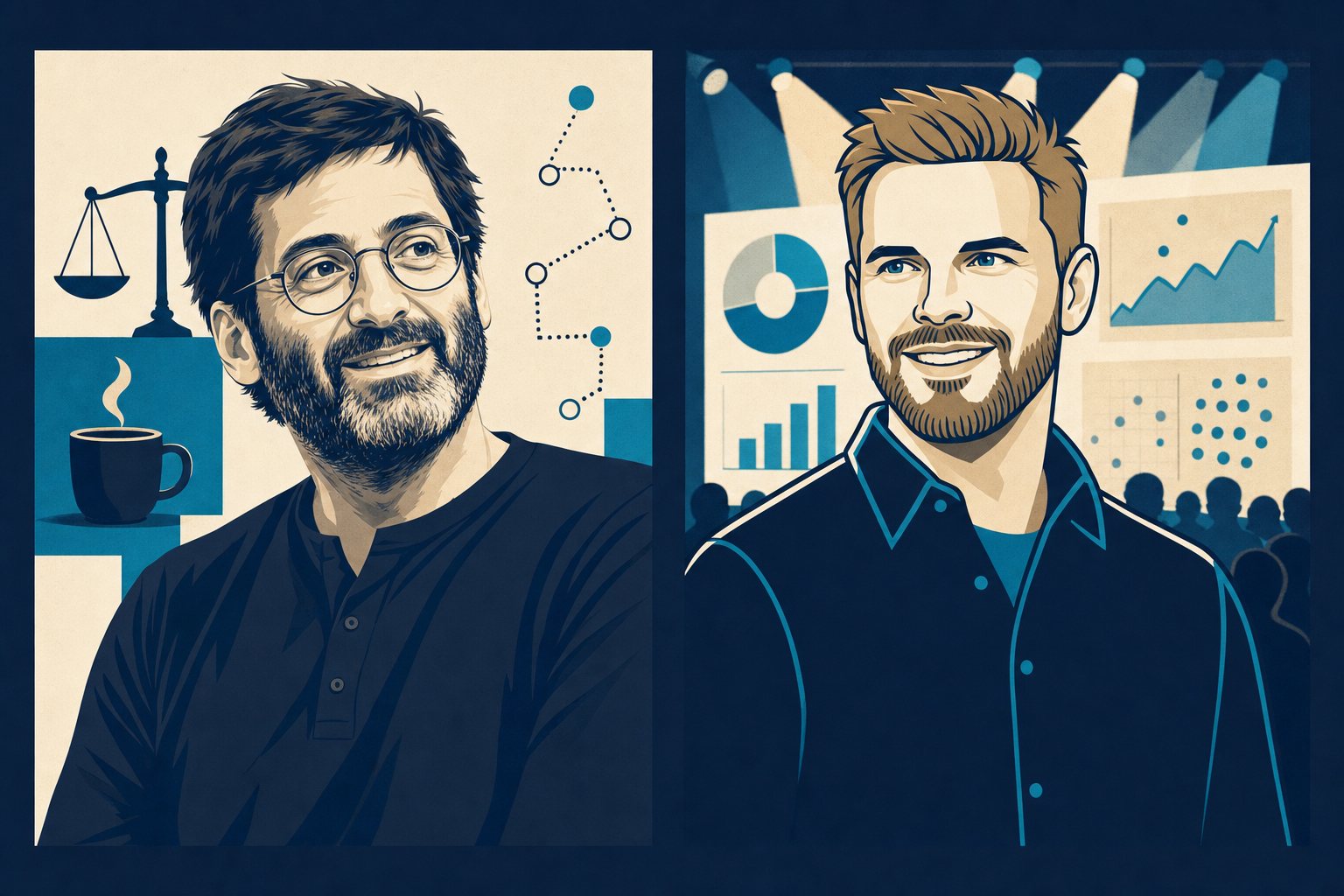
Two speakers, one territory: the psychology of irrational decisions. One is the Duke professor who wrote the book on predictable irrationality and made behavioral economics a boardroom staple. The other is a neuropsychologist who has built AI products since 2019 and shows, from first-hand experience, how AI really works inside companies, and where it fails. Here is the comparison we’d want if we were booking a keynote ourselves, fees included, both of them, with the controversy covered too.
Full disclosure: this page is published by Dr. Jonathan Mall’s team. Yes, that’s a conflict of interest. So we hold ourselves to three rules: every factual claim is sourced, Dan Ariely’s strengths are stated without hedging, and we tell you plainly when he is the better booking. If we ever fail at that, email us and we’ll fix it.

Dan Ariely
James B. Duke Professor of Psychology and Behavioral Economics at Duke University; founder of the Center for Advanced Hindsight; author of the genre-defining Predictably Irrational (2008). Seven TED talks. His life inspired an NBC drama series. Multiple New York Times bestsellers across thirty-plus languages.[1][2][3]
Dr. Jonathan Mall
PhD in cognitive neuropsychology and AI entrepreneur; has worked with language models since 2017 and has been building his own LLM products since 2019, including as co-founder & Chief Innovation Officer of his AI company. Demonstrates the technology live on stage, from first-hand building experience. Featured by BBC, ARD Tagesthemen and N-tv.[10][14]
The short version
Most people land here checking Dan Ariely’s speaking fee, so let’s start there: Gotham Artists lists him at $50,000, $75,000[4]; All American Speakers cites $50,000, $100,000[5], putting him roughly 10–20× above Jonathan’s mid-four-figure (€) bracket. What that fee buys is one of the most recognized names in behavioral economics: the Duke professorship, the MIT lineage, Predictably Irrational still assigned in MBA programs worldwide, seven TED talks, co-founded companies including one acquired by Google, and an NBC drama series based on his life, mainstream pop-culture reach few academics achieve.[1][2][3]
Dr. Jonathan Mall works the same territory, the psychology of irrational decisions, from the practitioner’s side: a neuropsychology PhD who builds AI himself, and keynotes built around the bigger picture: what AI actually is, how AI adoption really works inside companies, and the mind shifts teams need to work with AI and agents, illustrated with live demonstrations such as digital twins, in German, English or Dutch, with an optional hands-on workshop.[10] Ariely changes how an audience frames decisions; Mall hands the audience a method. Both are legitimate briefs, and they are rarely the same one.
Side by side, at a glance
| Dan Ariely | Dr. Jonathan Mall | |
|---|---|---|
| Core promise | Reveal the hidden forces shaping decisions about money, honesty, and motivation, grounded in rigorous academic experiments | Understand how AI really works inside companies: from someone who builds it himself, demonstrated live |
| Fee range | High five figures (US$), Gotham Artists lists $50,000, $75,000; All American Speakers cites $50,000. $100,000; Major international events likely approach six figures[4][5] | Mid four figures (€) for European keynotes; exact quote in 48h. Keynote + half-day workshop bundles available[11] |
| Background | James B. Duke Professor, Psychology & Behavioral Economics, Duke University; former MIT Sloan Professor (1998–2008); co-founded Irrational Labs, Timeful (acquired Google 2015), Irrational Capital[1][2] | PhD cognitive neuropsychology (Univ. of Groningen); has worked with language models since 2017, from word2vec to GPT-2, and has been building his own LLM products since 2019, including as co-founder of his AI company[14] |
| Books | Predictably Irrational (2008), The Upside of Irrationality (2010), The (Honest) Truth About Dishonesty (2012), Dollars and Sense (2017), Misbelief (2023) and more, multiple NYT bestsellers in 30+ languages[2] | No bestselling books (a real disadvantage): publishes open methodology & case studies instead |
| Signature topics | Behavioral economics & irrational decision-making · psychology of money & financial decisions · workplace motivation · ethics and honesty · misbelief and conspiracy psychology[6][7] | “Digital Twins: The Future of Market Research” · “Consumers Buy Weird: Neuroscience Meets AI” · “From Chatbot to AI Operating System”[10] |
| On-stage style | Classic academic storyteller: memorable real-world experiments (candle puzzle, Lego study, organ donation data) translated into counterintuitive takeaways[3] | Live experiments with the audience; demonstrates AI tools on stage in real time, with an offline fallback prepared[10] |
| Languages | English[6] | German, English, Dutch |
| Currently | Duke professor; Misbelief (2023) his most recent major book; NBC series “The Irrational” ran two seasons (2023–2025)[2][8] | Material produced inside his own AI company; demos current to the month of your event |
| Best for | Broad-audience events on decision-making, HR/culture, financial services, leadership or misinformation, wherever behavioral economics applies and budget is flexible | Leadership & innovation events that want to understand how AI in companies really works, shown live by someone who builds it himself |
What Jonathan Mall does differently
Jonathan Mall comes at the same question: why do consumers decide irrationally?, from the builder’s side. He earned a PhD in cognitive neuropsychology, then turned the science into working software: he has worked with language models since 2017, from word2vec to GPT-2, and has been building his own LLM products since 2019, shipping an LLM product in early 2021, a year and a half before ChatGPT[14], including as co-founder and Chief Innovation Officer of neuroflash.[14] He still builds AI modules himself today. Where Ariely translates behavioral science into unforgettable lab stories, Mall turns it into the bigger picture: what AI actually is, how AI adoption really works inside companies, and what doesn’t, and the mind shifts people need to work effectively with AI and agents.
The keynote signature is showing, not telling. Live demonstrations and audience experiments carry the argument, and AI “digital twins” of target audiences are one concrete example of what he has built. In the keynote below, German publisher Verlagsgruppe Oetinger tested a new game’s cover, claim and shelf presence with digital twins before printing. The published case reports 92% agreement with the parallel classical market research study.[12] That case shows the method working in practice; for the state of the wider field, Kantar’s analysis of synthetic data in market research is a sober independent primer.[13] Mall also says openly where AI adoption in companies fails, process, data, ownership, fear, tool sprawl, and how to overcome it, exactly what you want from a speaker who has introduced this technology inside real organizations. Content is tool-agnostic: no product pitch from the stage.
The trade-offs are real: no bestselling book, no 2-million-view TED talks, a fraction of Ariely’s global name recognition, and none of the pop-culture halo that comes with having an NBC drama based on your life. What Mall offers instead is currency and depth, the quirks of consumer psychology paired with the quirks of AI itself, the kind of practical “how to actually work with these models” insight that only comes from years of building and shipping them. Digital twins, AI operating systems and AI search visibility as they exist right now, demonstrated live, in German, English or Dutch.[10]
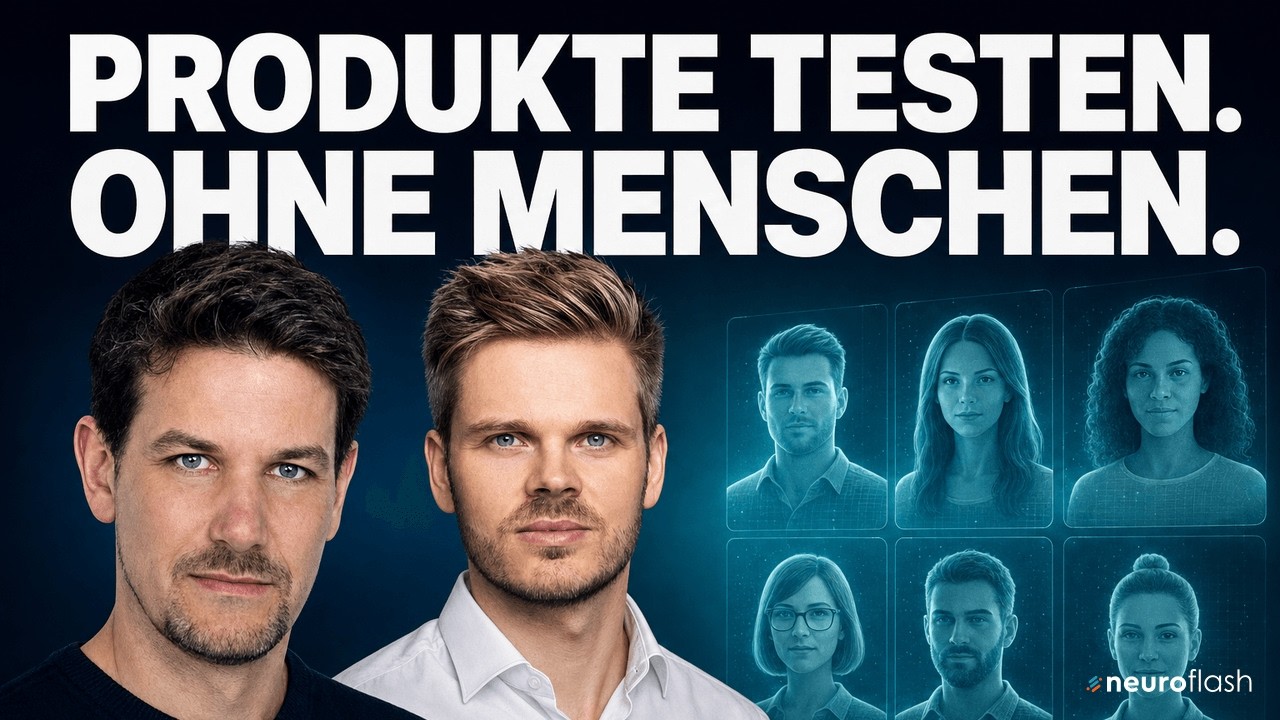
Live case: pre-testing a product launch with digital twins. English case write-up with all numbers.
Planning an English-language event? A full-length English keynote recording is available on request. Ask via the booking page and it’s in your inbox the same day.
Keynote (45–60 min)
Main-stage or leadership meeting. Live AI demos tailored to your industry and audience; interactive experiments with the room.
Keynote + Workshop
Half-day hands-on session for marketing/insights teams after the keynote: build and query digital twins on your own use cases. Two formats, one booking.
Virtual / Hybrid
Remote keynote with the same live demos, screen-shared. Reduced fee; useful for distributed teams and global town halls.
Moderated the lively follow-up discussion with great composure. The audience feedback was outstanding.
Stefan Staat BAUHAUS AG
Very inspiring and exciting: expert content, delivered both charmingly and informatively.
Katharina Schmidmaier WEFRA LIFE
Exciting insights, perfectly tailored to our timeframe, with strong audience engagement.
Ann-Katrin Hilker hmmh AG
Translated from German; originals on jonathanmall.com[10]. References for organizer-to-organizer calls available on request.
What makes Dan Ariely special
The scale of Ariely’s influence on how business thinks about decisions is genuinely difficult to overstate. Predictably Irrational (2008) did something rare: it translated academic behavioral economics into a book that MBA programs still assign, HR directors still cite, and finance teams still argue about in 2026. It was not the first popular behavioral-economics book, but it became the reference, sold in thirty-plus languages, multiple NYT bestseller appearances, a direct line from the lab findings of Kahneman and Thaler into the day-to-day vocabulary of strategy.[2]
On stage, his signature is the real experiment: not a tidied-up metaphor but the actual candle-puzzle finding, the actual Lego study on meaningful work, the actual organ-donation data from European countries that differ only in their DMV checkbox design.[3] Those stories have the authority of peer-reviewed research and the memorability of a good film scene. Seven TED talks cover the arc from decision-making to money to workplace motivation to the psychology of misbelief. The most recent major work, Misbelief (2023), is directly relevant to any audience grappling with misinformation, conspiracy thinking, or polarized stakeholder groups.[2] He also carries an unusual pop-culture halo: an NBC drama series based on his life ran two seasons (2023–2025), giving his name reach well beyond the conference circuit.[8]
The institutional weight is equally rare: Duke professorship with joint appointments across business, public policy and medicine; MIT faculty from 1998 to 2008; the Center for Advanced Hindsight he founded at Duke; and co-founded companies including Timeful, acquired by Google in 2015.[1][2] His format is the classic keynote, compelling experiments, counterintuitive findings, and actionable heuristics, without live technology demonstrations or hands-on workshop add-ons.
A note on the 2021 data-integrity controversy
Any due-diligence review of Ariely will encounter this, so we cover it plainly. A 2012 paper on honesty pledges that Ariely co-authored was retracted from PNAS in 2021 after the Data Colada team published forensic analysis identifying statistical signatures consistent with fabricated data in one study’s dataset.[9] The retraction notice states that data in the study “were falsified.” The Excel file’s metadata listed Ariely as creator.
What is established: the data were fabricated. What is unresolved: who fabricated them. Ariely consistently denies personal fabrication; he told Business Insider (2024) that he received the dataset from the insurance-company partner and failed to vet it adequately, and that Duke’s three-year investigation “found no evidence that Ariely had used fake data knowingly.” Duke has neither confirmed nor denied this characterization. The investigation’s outcome was not made public, citing confidentiality.[9] Co-author Francesca Gino (Harvard) faced separate, broader misconduct proceedings.
The irony of a controversy touching a paper titled The (Honest) Truth About Dishonesty is not lost on anyone, and risk-averse procurement teams at large organizations may register it. We flag it because sourced transparency is the point of this page, not to convict or to fully exonerate. That question remains genuinely open.
His most-watched talk, 2.18M views. Organ-donation data, visual illusions, and the architecture of choice.[3]
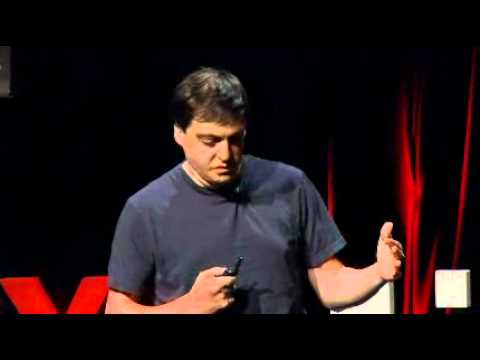
The Lego study and workplace motivation. 719K views.[3]
Where each one wins
Book Ariely when…
- You need a marquee name every C-suite attendee will recognize, broad-audience events where the speaker’s brand builds the conference brand
- The audience spans HR, finance, strategy and risk: behavioral economics applied to money, motivation or ethics crosses all of those
- You want keynote storytelling grounded in rigorous academic research, from the researcher who ran the experiments himself
- Misbelief or misinformation is the conference theme. His 2023 book is the most timely material he has
- Budget is not the primary constraint and the name alone drives registrations or PR
Book Mall when…
- Your audience should hear how AI in companies actually works, including what fails, from someone who builds AI himself at the PhD-level intersection of consumer psychology and AI
- The audience is leaders and teams starting to work with AI and agents and needs the mind-shift and enablement angle, illustrated with live demos and digital twins rather than lab anecdotes
- The event runs in German or Dutch: Ariely presents in English only
- A hands-on workshop should follow the keynote, applying the methods to your team’s own questions
- The data-integrity controversy around Ariely is a concern for risk-averse procurement teams, or the budget ceiling is mid four figures (€)
Where they sit in the speaker landscape
Every speaker in this territory balances two questions: do they talk about people or about technology, and do they aim to inspire or to equip? Our read, based on each speaker’s published talks and positioning: tap or hover any avatar for the one-line case. Dot size reflects typical fee tier.
Equip · methods & how-toInspire · vision & storiesHuman psychologyAI & technologySutherlandRory SutherlandBehavioral science & advertising alchemy · celebrity tierLindstromMartin LindstromNeuromarketing & small data storytelling · celebrity tierDooleyRoger DooleyPractical neuromarketing & friction · mid tierGawdatMo GawdatAI, ethics & happiness · celebrity tierLeonhardGerd LeonhardFuturist: technology vs. humanity · premium tierSchickNina SchickGenerative AI & deepfakes analyst · premium tierKozyrkovCassie KozyrkovDecision intelligence, ex-Google · premium tierMallJonathan MallNeuroscience × applied AI; digital twins, live demos · premium tier
Questions organizers actually ask
What does Dan Ariely charge for a keynote?
Bureau listings place him in the high five-figure (US$) range: Gotham Artists lists $50,000, $75,000[4]; All American Speakers cites $50,000, $100,000.[5] Major international events likely approach or exceed six figures. Jonathan Mall’s European keynotes run in the mid four figures (€), a lower bracket, with an exact quote within 48 hours via the booking page. For the wider picture, see our guide: What does an AI keynote speaker cost in 2026?
What does Dan Ariely speak about?
His core topics are behavioral economics and human irrationality, why people make predictably poor decisions about money, honesty, motivation, and fairness. His most recent major talk draws on Misbelief (2023), examining how rational people adopt irrational beliefs. Classic talks cover consumer decision-making, workplace motivation, and financial psychology.[6][7]
Who is a good alternative to Dan Ariely?
If you want the same behavioral-science foundation applied directly to AI in companies, Jonathan Mall covers the psychology of irrational decision-making from a neuropsychology PhD perspective, and adds live AI demonstrations from someone who builds AI himself, showing how AI adoption really works and what fails. Fair caveat: Ariely has a 20-year head start in building his public brand; the trade-off is global name recognition versus hands-on, AI-integrated methodology.
Does Dan Ariely speak German?
No: he delivers in English. Jonathan Mall delivers keynotes in native German, fluent English and Dutch.
Does Dan Ariely do workshops or live demos?
His format is the keynote: compelling experiments, counterintuitive findings, and behavioral heuristics. He does not run live AI demonstrations or hands-on methodology workshops. Jonathan Mall’s keynotes are built around live demos, de-risked like the centerpiece they are: every demo has an offline fallback prepared in advance, the talk works without venue Wi-Fi, and all that’s needed is standard conference A/V (HDMI + sound). No audience devices required.
What is the 2021 Dan Ariely honesty study controversy?
A 2012 paper Ariely co-authored on honesty pledges was retracted from PNAS in 2021 after forensic analysis by the Data Colada team found the dataset contained fabricated figures.[9] Ariely denies fabricating the data; Duke University conducted a multi-year investigation but has not made its findings public. The established fact: the paper’s data were falsified. The unresolved question: who fabricated them.
Checking dates for a behavioral science or AI keynote?
Get Jonathan’s availability, an exact quote, a tailored outline and an English keynote recording within 48 hours, or straightforward advice that another speaker (maybe Ariely) fits your brief better.
About the author: Dr. Jonathan T. Mall is a cognitive neuropsychologist, co-founder and Chief Innovation Officer of neuroflash. He has worked with language models since 2017 and has built LLM products since 2019. For 20 years he has worked at the intersection of brands, communication and cognitive research; on stage he shares what building and introducing AI in companies really looks like, live.
Still shortlisting? Take a look at the 7 leading AI keynote speakers in 2026 for more names to consider.
See the full landscape: Keynote Speaker Comparison Map · What organizers say: References
Sources
- fuqua.duke.edu and scholars.duke.edu. Dan Ariely current title (James B. Duke Professor, Psychology & Behavioral Economics), joint appointments confirmed (Fuqua, Sanford School of Public Policy, Duke School of Medicine). Verified June 2026. fuqua.duke.edu
- Wikipedia: Dan Ariely: books and years, TED talks, MIT appointment (1998–2008), co-founded companies, NBC series. en.wikipedia.org/wiki/Dan_Ariely
- TED.com. Dan Ariely speaker page; seven talks listed. “Are we in control of our own decisions?” (17:01, 2.18M views on YouTube, ID: 9X68dm92HVI, oEmbed-verified June 2026). ted.com/speakers/dan_ariely
- Gotham Artists, Dan Ariely profile, fee $50,000, $75,000. Fetched via Jina, June 2026. gothamartists.com/dan-ariely
- All American Speakers, Dan Ariely fee $50,000, $100,000. Sourced from search-result snippet June 2026 (403 on direct page fetch). allamericanspeakers.com
- Aurum Bureau: Dan Ariely keynote topics and titles. Fetched via Jina, June 2026. aurumbureau.com
- HiCue Speakers: Dan Ariely keynote titles. Fetched via Jina, June 2026. hicuespeakers.com
- IMDb: “The Irrational” (NBC, tt16288838): premiered Sept 25 2023; Season 2 began Oct 8 2024; cancelled May 9 2025 after two seasons. imdb.com/title/tt16288838
- Data Colada #98 (Uri Simonsohn, Leif Nelson, Joe Simmons): forensic analysis of the PNAS honesty-pledge study dataset, August 2021. PNAS retraction notice, 2021 (data in Study 3 “were falsified”). Ariely’s characterization of Duke’s investigation outcome: Business Insider, 2024. Duke declined to confirm or deny. datacolada.org/98
- Dr. Jonathan Mall. Keynotes, credentials, languages, testimonials (German originals). jonathanmall.com/en
- Jonathan Mall fee band: published by his own team on this page; exact quotes via the booking page, answered within 48 hours.
- Digital Twins Case Study: Verlagsgruppe Oetinger × neuroflash. 92% Agreement with the parallel classical market research study. jonathanmall.com. Note: this validates Mall’s own method on one published case.
- Kantar: “Synthetic Data: The Real Deal?” (independent analysis of synthetic respondents vs. human data). kantar.com
- neuroflash GmbH: Europe’s market-leading AI content-generation platform; almost 2 million registered users; building language models since 2019; AI writer launched early 2021, roughly 1.5 years before ChatGPT (Nov 2022). neuroflash.com
Last updated June 2026. Fee data changes; always confirm current quotes with the speakers’ teams. Spotted an error? Tell us and we’ll correct it.