Gerd Leonhard or Jonathan Mall: Which Keynote Speaker for Your Event?
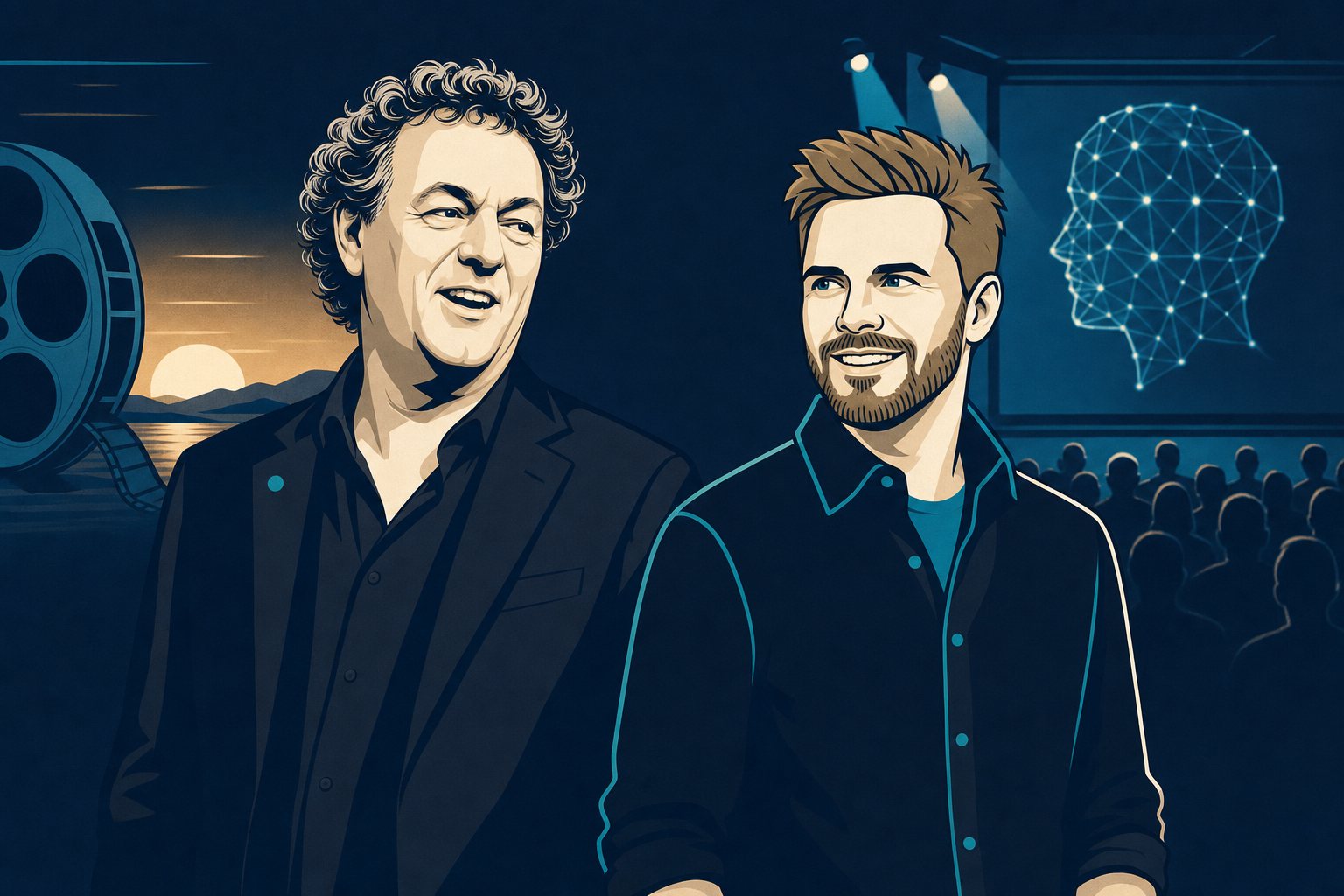
Two ways to put AI on your main stage. One is among the world’s most-booked futurists, two decades asking what technology should do for humanity, staged with arguably the best production values in the business. The other is a neuropsychologist who has built AI products since 2019 and shows, from first-hand experience, how AI really works inside companies, and where it fails. Here is the comparison we’d want if we were booking a keynote ourselves, fees included, both of them.
Full disclosure: this page is published by Dr. Jonathan Mall’s team. Yes, that’s a conflict of interest. So we hold ourselves to three rules: every factual claim is sourced, Gerd Leonhard’s strengths are stated without hedging, and we tell you plainly when he is the better booking. If we ever fail at that, email us and we’ll fix it.
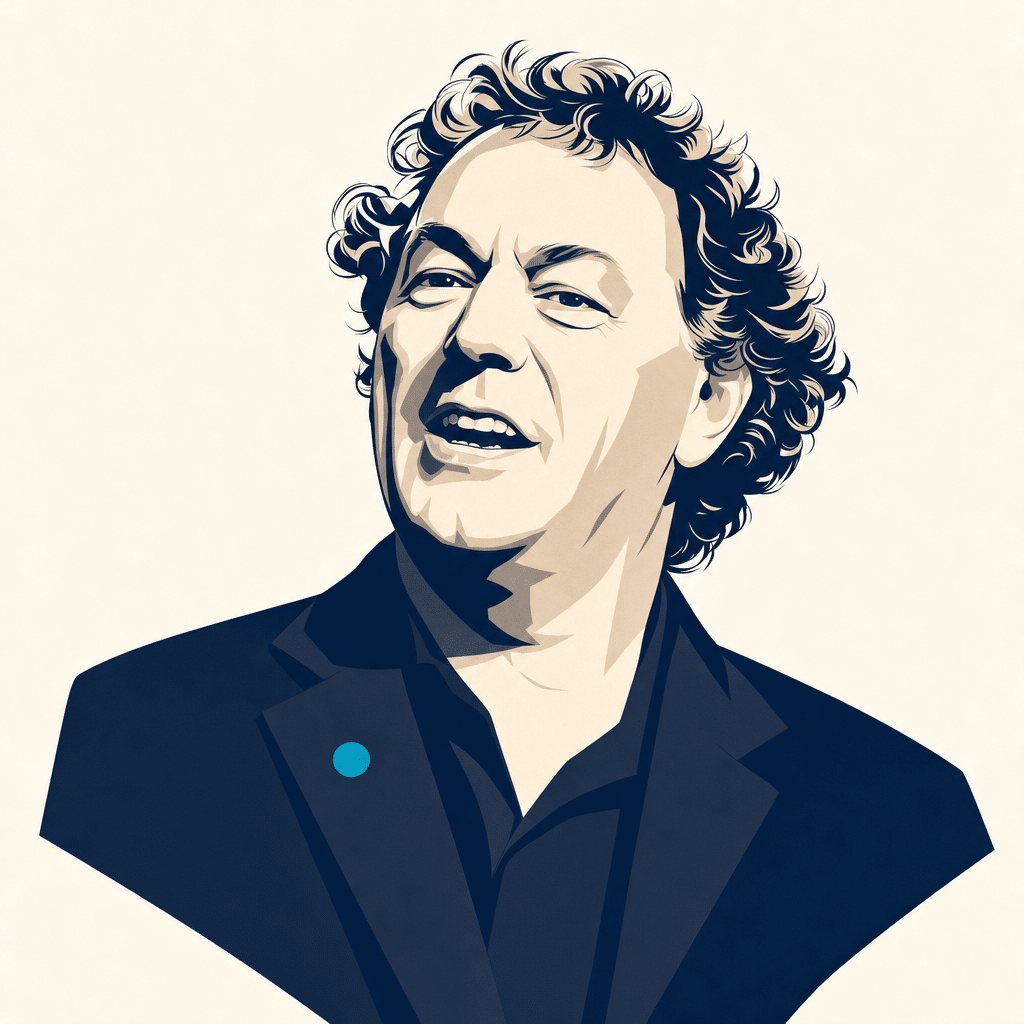
Gerd Leonhard
Futurist, author and film-maker; founder and CEO of The Futures Agency in Zürich. More than 2,000 keynote engagements in 60+ countries since 2004, reaching a combined audience of over 2.5 million.[1][5] His book Technology vs. Humanity (2016) is available in 12 languages, and Wired named him one of the 100 most influential people in Europe.[2][3]

Dr. Jonathan Mall
PhD in cognitive neuropsychology and AI entrepreneur; has worked with language models since 2017 and has been building his own LLM products since 2019, including as co-founder & Chief Innovation Officer of his AI company. Demonstrates the technology live on stage, from first-hand building experience. Featured by BBC, ARD Tagesthemen and N-tv.[8][12]
The short version
Most people land here checking Gerd Leonhard’s fee. Speaker bureaus list him in the mid five figures (US$) for in-person keynotes, with virtual sessions in the low five figures[4], and for flagship international events with that budget, he is one of the safest futurist bookings in the world: two decades on the circuit, a signature book in 12 languages, and cinematic “Super-Keynotes” with arguably the best production values in the futurist business, delivered in English or German.
Dr. Jonathan Mall’s keynotes run in the mid four figures (€), depending on format and customization (exact quote within 48 hours), clearly below Leonhard’s rate. What that bracket buys is a different job on stage: Leonhard gives a 5,000-person plenary a shared vision of the next decade; Mall gives the room the builder’s view, what AI actually is, how AI adoption really works inside companies and what doesn’t, and the mind shifts teams need to work with AI and agents, illustrated with live demonstrations such as digital twins of your customers. A keynote-plus-workshop bundle typically still lands below a single marquee plenary fee, two formats for less than one.
Side by side, at a glance
| Gerd Leonhard | Dr. Jonathan Mall | |
|---|---|---|
| Core promise | See where technology is taking humanity by 2030, and decide what your organization should want from it | Understand how AI really works inside companies: from someone who builds it himself, demonstrated live |
| Fee range | Mid five figures (US$): bureau-listed $30,000, $50,000 in-person, $10,000, $20,000 virtual[4] | Mid four figures (€) for European keynotes; exact quote in 48h. Keynote + half-day workshop bundles available |
| Background | Berklee-trained musician turned futurist; CEO of The Futures Agency (Zürich); on the global circuit since 2004[1][5] | PhD cognitive neuropsychology (Univ. of Groningen); has worked with language models since 2017, from word2vec to GPT-2, and has been building his own LLM products since 2019, including as co-founder of his AI company[12] |
| Books & media | Seven books incl. Technology vs. Humanity (2016, in 12 languages); four of his own films since 2020; YouTube channel with ~429K subscribers[1][2][7] | No bestselling books (a real disadvantage): publishes open methodology & case studies instead |
| Signature talks | “The Good Future: Really?” · “Intelligence vs Consciousness: Preserving Humanity in the Coming Era of AGI” · “Digital Labor: AI Agents, Automation and the Future of Work”[3] | “Digital Twins: The Future of Market Research” · “Consumers Buy Weird: Neuroscience Meets AI” · “From Chatbot to AI Operating System”[8] |
| On-stage style | “Super-Keynotes”: immersive, cinematic, super-wide-screen productions backed by his own films, arguably the best staging in the futurist business[1][7] | Live experiments with the audience; demonstrates AI tools on stage in real time, with an offline fallback prepared[8] |
| Languages | English and German (German-born; runs a dedicated German site)[5] | German, English, Dutch |
| Based in | Zürich, Switzerland: at home on DACH and global stages alike[1] | Hamburg, Germany (low travel cost within Europe) |
| Best for | Large international congresses and leadership summits that want a marquee futurist vision of technology and humanity, staged like a film premiere | Leadership & innovation events that want to understand how AI in companies really works, shown live by someone who builds it himself |
What Jonathan Mall does differently
Jonathan Mall comes at the technology from the builder’s side. He earned a PhD in cognitive neuropsychology, then turned the science into working software: he has worked with language models since 2017, from word2vec to GPT-2, and has been building his own LLM products since 2019, shipping an LLM product in early 2021, a year and a half before ChatGPT[12], including as co-founder and Chief Innovation Officer of neuroflash.[12] He still builds AI modules himself today. Where Leonhard examines what AI should mean for humanity, Mall demonstrates the bigger picture from first-hand experience: what AI actually is, how AI adoption really works inside companies, and what doesn’t, and the mind shifts people need to work effectively with AI and agents.
The keynote signature is showing, not telling. Live demonstrations and audience experiments carry the argument, and AI “digital twins” of target audiences are one concrete example of what he has built. In the keynote below, German publisher Verlagsgruppe Oetinger tested a new game’s cover, claim and shelf presence with digital twins before printing. The published case reports 92% agreement with the parallel classical market research study.[10] That case shows the method working in practice; for the state of the wider field, Kantar’s analysis of synthetic data in market research is a sober independent primer.[11] Mall also says openly where AI adoption in companies fails, process, data, ownership, fear, tool sprawl, and how to overcome it, exactly what you want from a speaker who has introduced this technology inside real organizations. Content is tool-agnostic: no product pitch from the stage.
The trade-offs are real: no two-decade futurist canon, no book in 12 languages, no film credits, a fraction of Leonhard’s global reach. What he offers instead is currency and depth, the quirks of consumer psychology paired with the quirks of AI itself, the kind of practical “how to actually work with these models” insight that only comes from years of building and shipping them. Digital twins, AI operating systems and AI search visibility as they exist right now, demonstrated live, in German, English or Dutch.[8]
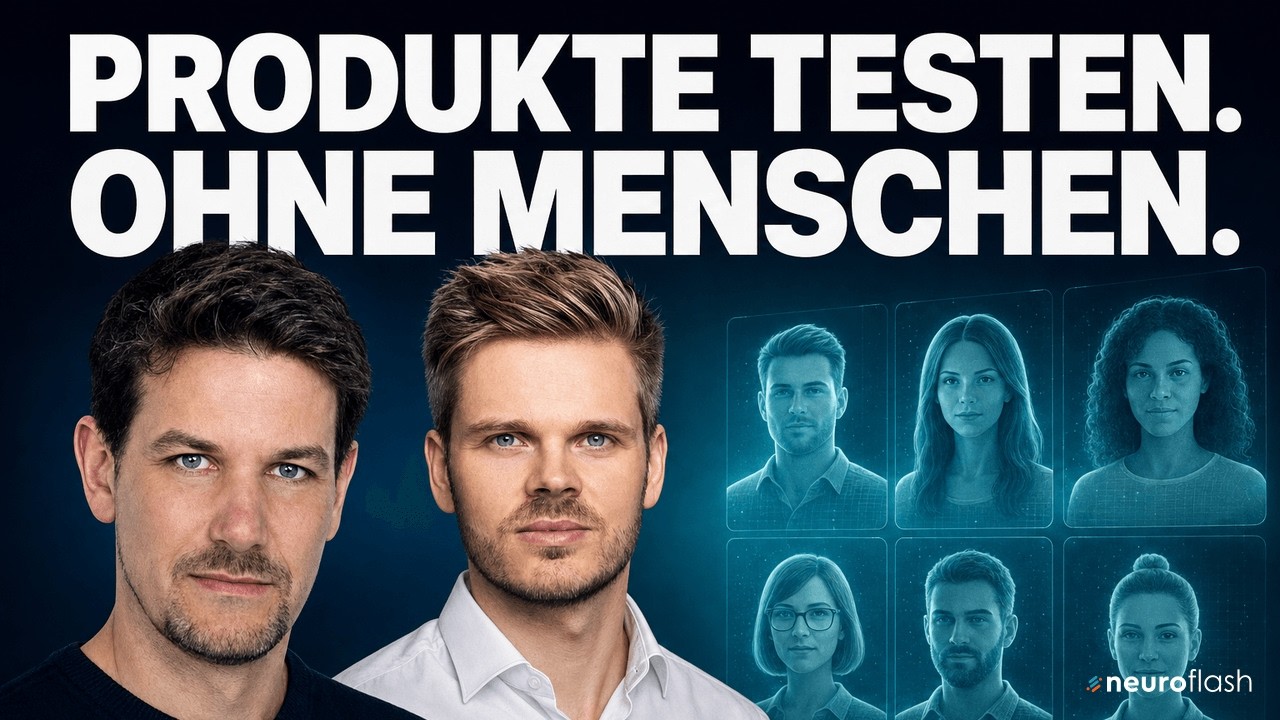
Live case: pre-testing a product launch with digital twins. English case write-up with all numbers.
Planning an English-language event? A full-length English keynote recording is available on request. Ask via the booking page and it’s in your inbox the same day.
Keynote (45–60 min)
Main-stage or leadership meeting. Live AI demos tailored to your industry and audience; interactive experiments with the room.
Keynote + Workshop
Half-day hands-on session for marketing/insights teams after the keynote: build and query digital twins on your own use cases. The bundle typically costs less than a marquee keynote alone.
Virtual / Hybrid
Remote keynote with the same live demos, screen-shared. Reduced fee; useful for distributed teams and global town halls.
Moderated the lively follow-up discussion with great composure. The audience feedback was outstanding.
Stefan Staat BAUHAUS AG
Very inspiring and exciting: expert content, delivered both charmingly and informatively.
Katharina Schmidmaier WEFRA LIFE
Exciting insights, perfectly tailored to our timeframe, with strong audience engagement.
Ann-Katrin Hilker hmmh AG
Translated from German; originals on jonathanmall.com[8]. References for organizer-to-organizer calls available on request.
What makes Gerd Leonhard special
Start with the scale: Gerd Leonhard has been one of the world’s most-booked futurists for two decades, more than 2,000 engagements in over 60 countries since 2004, reaching a combined audience of over 2.5 million (his own site puts it at 3.5 million across 70+ countries).[1][5] His 2016 book Technology vs. Humanity framed the ethics debate around AI and exponential technology years before it hit the mainstream, his “androrithms,” the qualities that make us human, still travel through boardrooms today, and it has been translated into 12 languages.[2] Wired named him among the 100 most influential people in Europe, he is a Fellow of the Royal Society of Arts, and before any of that he was a Berklee-trained musician who won the Quincy Jones Award.[1][3]
What sets him apart even among A-list futurists is the staging. His “Super-Keynotes” are immersive, cinematic, super-wide-screen productions, backed by four of his own films since 2020, a non-profit (The Good Future Project) and a YouTube channel with roughly 429,000 subscribers, so the talk anchors the emotional tone of an entire event rather than just filling a slot.[1][7] And he presents in English and German, he is German-born and runs a dedicated German site, which makes him one of very few global-tier futurists who serve DACH audiences natively.[5] One thing to know going in: Technology vs. Humanity (2016) remains his most recent major book, and his lane is commentary and ethics rather than building, no live AI demos, no hands-on method transfer. Audiences leave Leonhard with a worldview; that is precisely the job he is hired to do, and nobody stages it better.
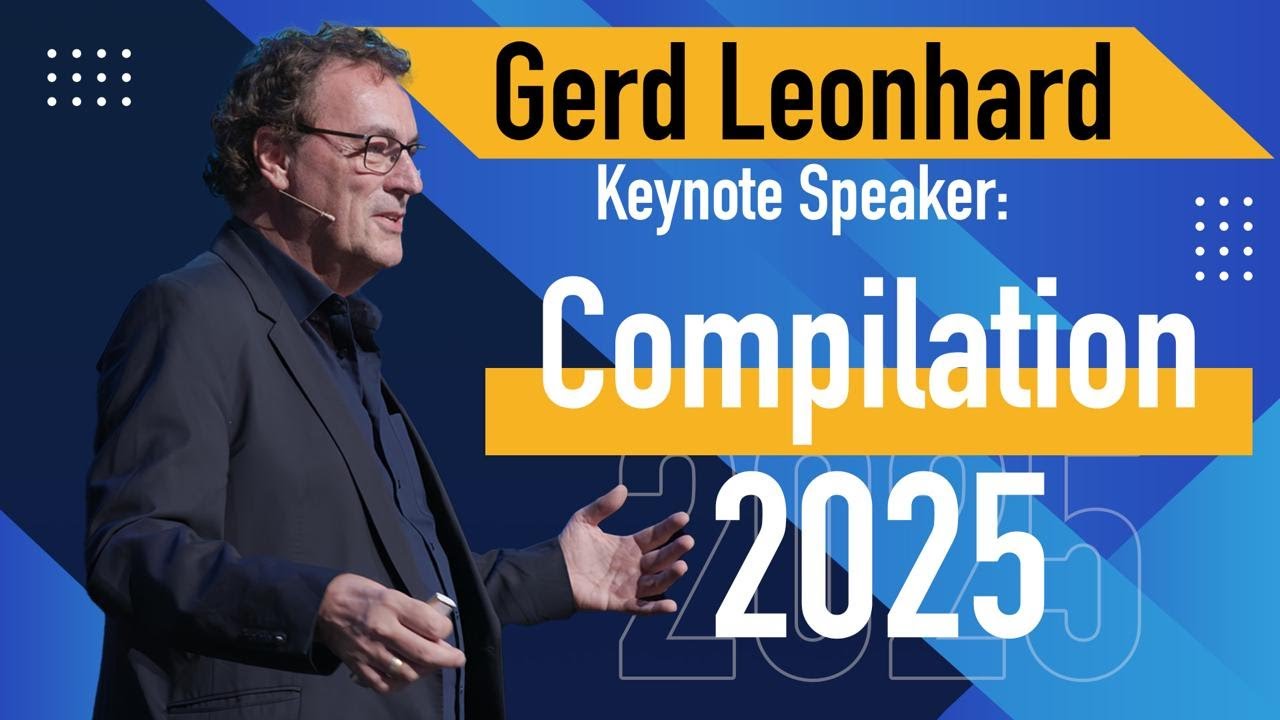
The cinematic stage format in two minutes: films, super-wide-screen visuals, the full production. More on futuristgerd.com[1].
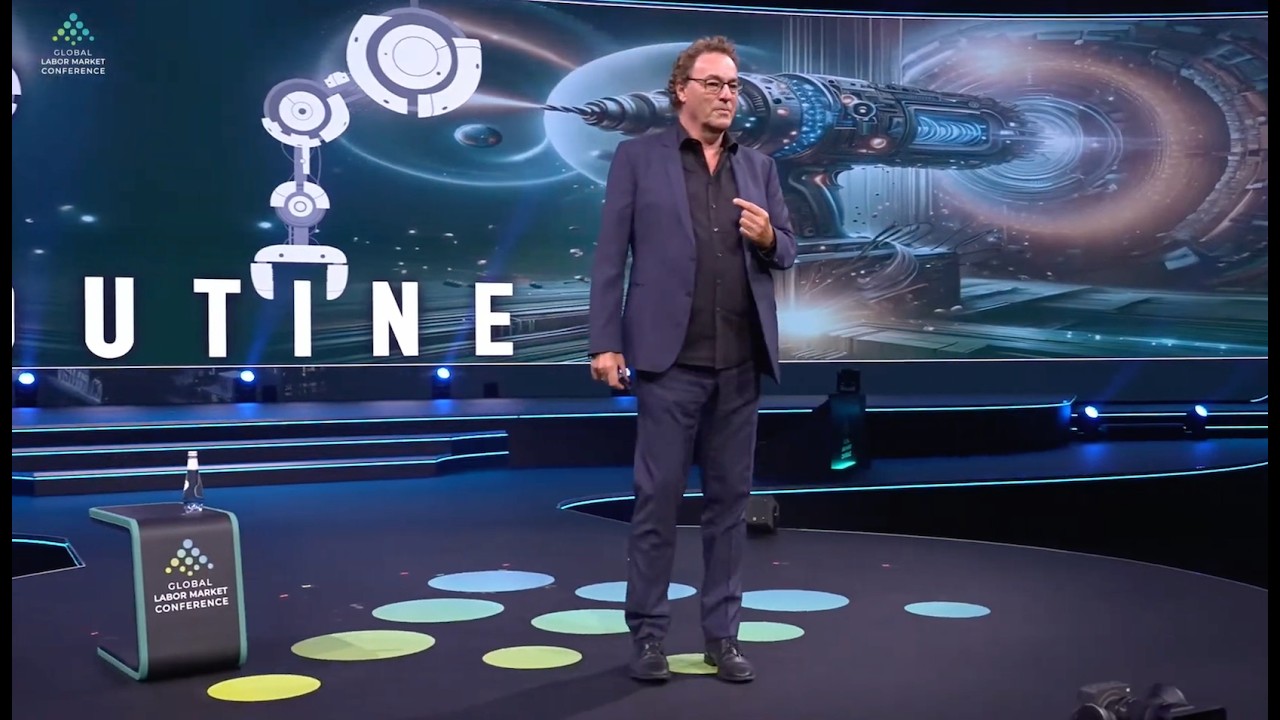
A recent, complete super-wide-screen keynote on AI and the future of work. Global Labor Market Conference, Riyadh, January 2025.
Where each one wins
Book Leonhard when…
- You need a marquee plenary name for a large international congress, and the goal is a shared big-picture vision of technology and humanity
- Your board or leadership team needs the ethics and governance framing of AI, “what should we want?”, before deciding what to build
- Maximum production value is part of the brief: a cinematic “Super-Keynote” that sets the emotional tone of the whole event
- You want that caliber of futurist in German as well as English, rare at his level
Book Mall when…
- Your audience should hear how AI in companies actually works, including what fails, from someone who builds AI himself, shown live and unscripted rather than described
- Leaders and teams starting to work with AI and agents need the mind-shift and enablement angle: neuromarketing, digital twins, synthetic research they can apply immediately
- You want keynote-plus-workshop depth: the half-day session applies digital twins to your team’s own questions
- The budget is mid four figures (€), below Leonhard’s mid-five-figure (US$) plenary fee, in German, English or Dutch
Where they sit in the speaker landscape
Every speaker in this territory balances two questions: do they talk about people or about technology, and do they aim to inspire or to equip? Our read, based on each speaker’s published talks and positioning: tap or hover any avatar for the one-line case. Dot size reflects typical fee tier.
Equip · methods & how-toInspire · vision & storiesHuman psychologyAI & technologyLindstromMartin LindstromNeuromarketing & small data storytelling · celebrity tierSutherlandRory SutherlandBehavioral science & advertising alchemy · celebrity tierArielyDan ArielyBehavioral economics research · premium tierDooleyRoger DooleyPractical neuromarketing & friction · mid tierGawdatMo GawdatAI, ethics & happiness · celebrity tierSchickNina SchickGenerative AI & deepfakes analyst · premium tierKozyrkovCassie KozyrkovDecision intelligence, ex-Google · premium tierMallJonathan MallNeuroscience × applied AI; digital twins, live demos · premium tier
Questions organizers actually ask
How much does Gerd Leonhard charge for a keynote?
Speaker bureaus list him at $30,000, $50,000 for in-person keynotes and $10,000, $20,000 for virtual sessions.[4] His own site no longer publishes fees. The booking form asks for your approximate budget.[6] Jonathan’s fee is typically in the mid four figures (€), including extensive customization; exact quote within 48 hours via the booking page.[9] For the wider picture, see our guide: What does an AI keynote speaker cost in 2026?
What does Gerd Leonhard speak about?
The relationship between technology and humanity: AI and AGI ethics, “The Good Future,” digital labor and AI agents, techno-optimism, and what really matters in technology and society by 2030, big-picture foresight rooted in his 2016 book Technology vs. Humanity.[3]
Who is a good alternative to Gerd Leonhard?
It depends on the outcome you want. For a hands-on AI keynote with live demos and consumer-psychology methods your team can apply the next day, rather than a cinematic futures vision, Jonathan Mall, a neuropsychologist who has built AI products since 2019, is the closest fit in this series. For a global futurist headliner with two decades of brand, there is no substitute for Leonhard. The scorecard above puts both cases side by side.
Does Gerd Leonhard speak German?
Yes: he is German-born and presents in both German and English; he even runs a dedicated German site, gerdleonhard.de.[5] Jonathan also covers the DACH market natively, plus English and Dutch.
How customized are their keynotes, and what if the live demo fails?
Leonhard offers topic selection and “Futurizing Workshops” alongside his keynotes[6], but his strength is a polished, cinematic signature talk. Jonathan builds each keynote around the client’s industry and audience, including live AI demos using the client’s own brand or data, and offers hands-on workshop extensions. Because live demos are the point of his talk, they are engineered like one: every demo has an offline fallback prepared in advance, the talk works without venue Wi-Fi, and requirements are standard conference A/V (HDMI + sound). No audience devices needed.
Which one is right for a marketing or insights audience?
Leonhard speaks to the broad societal questions of AI; Jonathan speaks specifically to how consumers decide and how AI changes marketing, neuromarketing, digital twins, and synthetic research. For CMO summits and insights teams, Jonathan’s material is closer to the day job.
Checking dates for an AI or futurist keynote?
Get Jonathan’s availability, an exact quote, a tailored outline and an English keynote recording within 48 hours, or honest advice that another speaker (maybe Leonhard) fits your brief better.
About the author: Dr. Jonathan T. Mall is a cognitive neuropsychologist, co-founder and Chief Innovation Officer of neuroflash. He has worked with language models since 2017 and has built LLM products since 2019. For 20 years he has worked at the intersection of brands, communication and cognitive research; on stage he shares what building and introducing AI in companies really looks like, live.
For a broader shortlist, see the 7 best AI keynote speakers 2026, compared side by side.
See the full landscape: Keynote Speaker Comparison Map · What organizers say: References
Sources
- Gerd Leonhard: official site and 2026 bio (roles, films, “Super-Keynotes,” The Futures Agency, Zürich; recognition incl. Berklee/Quincy Jones Award; homepage claims a 3.5M total audience across 70+ countries). futuristgerd.com
- Gerd Leonhard: author page (books incl. Technology vs. Humanity, 2016, available in 12 languages). futuristgerd.com/expertise/author
- Chartwell Speakers: Gerd Leonhard profile (2026 keynote topics, exact titles; recognition incl. Wired’s 100 most influential in Europe). chartwellspeakers.com
- All American Speakers, Gerd Leonhard fee listing: $30,000, $50,000 live, $10,000, $20,000 virtual. allamericanspeakers.com; AAE Speakers lists the same range: aaespeakers.com
- Premium Speakers: Gerd Leonhard profile (over 2,000 engagements in 60+ countries since 2004, total audience over 2.5 million; presents in German and English; German-language topics). premium-speakers.com
- Gerd Leonhard: booking inquiry page (formats: live on location, virtual keynote, conversation/interview, seminar/”Futurizing Workshop”; approximate-budget field instead of published fees). futuristgerd.com/contact/booking-inquiry
- The Good Future Project (non-profit, 2022) and Leonhard’s films since 2020; YouTube channel ~429K subscribers, ~1,400 videos. thegoodfuture.org; film and channel details via futuristgerd.com and gerd.tv
- Dr. Jonathan Mall, Keynotes, credentials, languages, testimonials (German originals). jonathanmall.com/en
- Jonathan Mall fee band: published by his own team on this page; exact quotes via the booking page, answered within 48 hours.
- Digital Twins Case Study: Verlagsgruppe Oetinger × neuroflash. 92% Agreement with the parallel classical market research study (method and all numbers in the write-up). jonathanmall.com. Note: this validates Mall’s own method on one published case.
- Kantar: “Synthetic Data: The Real Deal?” (independent analysis of synthetic respondents vs. human data; field-level evidence, not specific to neuroflash). kantar.com
- neuroflash GmbH: Europe’s market-leading AI content-generation platform; almost 2 million registered users; building language models since 2019; AI writer launched early 2021, roughly 1.5 years before ChatGPT (Nov 2022). neuroflash.com
Last updated June 2026. Fee data changes; always confirm current quotes with the speakers’ teams. Spotted an error? Tell us and we’ll correct it.